
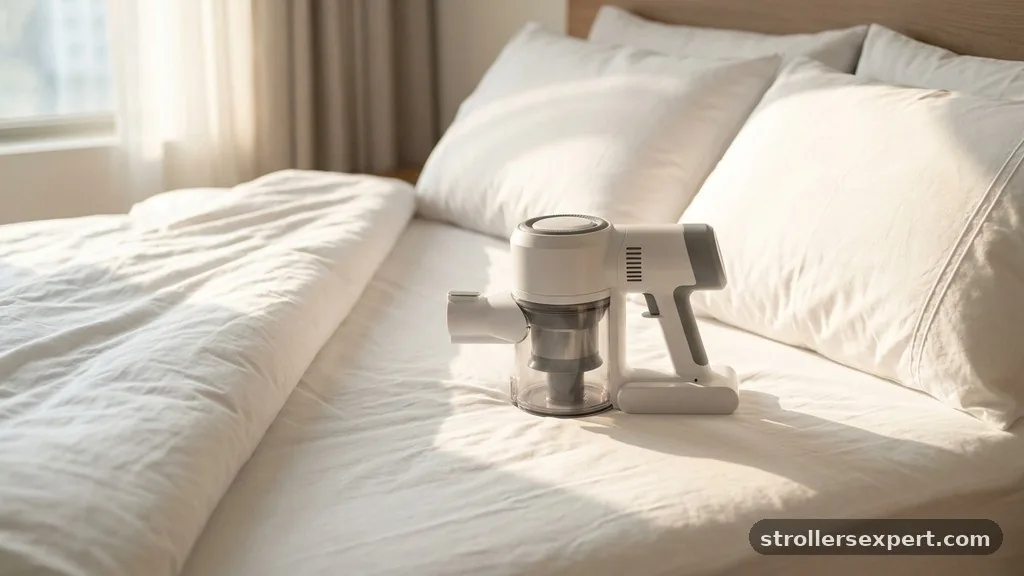
Raw suction power matters far less than heat and vibration when you are hunting microscopic arachnids hiding deep inside your upholstery.
Too many people buy standard uprights and wonder why their allergies refuse to quiet down.
Let us look at three specialized machines built specifically to handle these microscopic pests.
Key Takeaways
- Prioritize models offering high suction power measured in kilopascals to pull allergens out from deep mattress layers.
- Look for built-in UV-C light technology to neutralize bacteria and dust mites on contact.
- Seek out heat functions around 149 degrees Fahrenheit to effectively kill mites and dry out humid mattress fibers.
- Consider corded designs if you need unlimited runtime for deep-cleaning multiple beds in one go.
- Check for ultrasonic features that dislodge stubborn pests clinging tightly to fabric threads.
| Ultimate Deep Cleaning Powerhouse |  |
Bed Vacuum Cleaner with 20kPa Suction | Powerful 20kPa suction strength | Built-in 149°F heating system | Magnetic quick-release brush accessories | View on Amazon | Read Review |
| Unrestricted Cordless Freedom |  |
Teant Cordless Bed Mattress Vacuum | Completely cordless design | Up to 60 minutes runtime | LED smart display panel | View on Amazon | Read Review |
| Sensitive Skin Essential |  |
Cleera 16kPa Bed Vacuum with UV | Lightweight 3.8-pound body | Wide 17cm suction inlet | Automated UV-C safety sensors | View on Amazon | Read Review |
More Details on Our Top Picks
-
Bed Vacuum Cleaner with 20kPa Suction
If your mattress currently feels like a secret ecosystem for microscopic pests, this heavy-duty machine is your best friend. Delivering an impressive 20kPa suction paired with 48,000 strokes per minute, it pulls out embedded debris that standard vacuums simply glide right over.
You also get a built-in 149°F heating function to dry out trapped moisture, which is fantastic if you live in a humid climate. The only real downside here is the corded design, meaning you will need to watch your reach while moving across larger king-size beds.
- Suction Power:20kPa
- UV-C Light:253.7nm
- Heating Feature:149°F warm air
- Additional Feature:Dual ultrasonic vibration at 20 to 50,000Hz
- Additional Feature:Includes 3 aroma pads for freshness
- Additional Feature:Metal rubber-strip beater bar brush
-
Teant Cordless Bed Mattress Vacuum
Tangled cords can turn a simple bedroom chore into an annoying wrestling match, which is why going wireless is such a game changer. Packing a 2600mAh battery pack, this lightweight cleaner gives you up to 60 minutes of continuous runtime to roam freely from room to room without hunting for wall outlets.
A smart LED display keeps you updated on battery levels and active modes while you work. Keep in mind that cordless motors sometimes sacrifice a fraction of the raw pull found in corded alternatives, but the convenience here more than makes up for it.
- Type:Cordless
- Suction Power:18kPa
- UV-C Light:Ultrasonic tech care
- Heating Feature:149°F warm airflow
- Display:LED smart display
- Additional Feature:Hyper Helix suction with 33,000 taps per minute
- Additional Feature:HEPA micro-filtration traps fine dust
- Additional Feature:Red-to-blue breathing ring light
-
Cleera 16kPa Bed Vacuum with UV
Keeping your sleeping quarters hypoallergenic does not have to feel like a second job, especially with a lightweight tool like this in your corner. Tipping the scales at only 3.8 pounds, it glides effortlessly across thick duvets and plush couches without wearing out your wrist.
The wide 17cm suction inlet covers more ground in a single pass so you finish faster. Just remember to be careful with the fragrance oils, as using non-water-soluble liquids can potentially gum up the scent dispersal system.
- Suction Power:16kPa
- UV-C Light:253.7nm UV-C light
- Display:Smart dust sensing indicator
- Additional Feature:14,000 RPM high-frequency tapping motor
- Additional Feature:Washable HEPA multi-layer filtration
- Additional Feature:Adjustable soothing aroma release system
Frequently Asked Questions
How often should I vacuum to keep dust mites under control?
Aim for at least twice a week in high-traffic zones and bedrooms where you spend the most time. Regular cleaning stops populations from multiplying rapidly in your mattresses and carpets. Consistency is key because these pests reproduce fast. Skipping a couple of weeks lets allergen levels bounce right back up to where they started.
Do I really need a HEPA filter for dust mites?
Yes, because standard vacuum filters let microscopic mite feces and body fragments pass straight through the exhaust motor. A certified HEPA filter traps those tiny particles so they stay locked inside the machine. Without that high level of filtration, vacuuming simply acts as an aerosol dispenser for allergens. You end up breathing in the very dust you are trying to remove.
Are bagged vacuums better for allergies?
Bagged models generally offer superior containment for allergy sufferers because you never have to interact with a cloud of dust. Tossing a sealed disposable bag into the trash keeps your hands and lungs completely safe from exposure. Bagless bins can puff dust into the air when you dump them into your outdoor bin. If you do use a bagless unit, empty it slowly inside a large plastic trash bag to trap the escaping plume.
Can I use a regular vacuum on my mattress?
You can, but standard floor heads rarely provide enough agitation to pull mites out from deep mattress batting. A dedicated upholstery attachment or a motorized mini tool works much better on fabric surfaces. Always make sure the bottom of your vacuum head is clean before tackling the bed. You definitely do not want to transfer kitchen crumbs or outdoor dirt onto your sleeping surface.
What is the best way to clean hardwood floors to remove dust mites?
Hard floors do not harbor dust mites quite as deeply as carpets, but allergens still settle in the corners and grout lines. A vacuum with a soft dusting brush or a parquet tool picks up settled dust without scattering it into the air. Avoid dry sweeping with a standard broom since that just launches microscopic particles upward. Wet mopping afterward will capture any remaining dust that the vacuum missed.

Thomasjames is a stroller expert blogger sharing honest reviews, practical guides, and parenting tips, helping families choose safe, comfortable, high-quality baby strollers with confidence.