
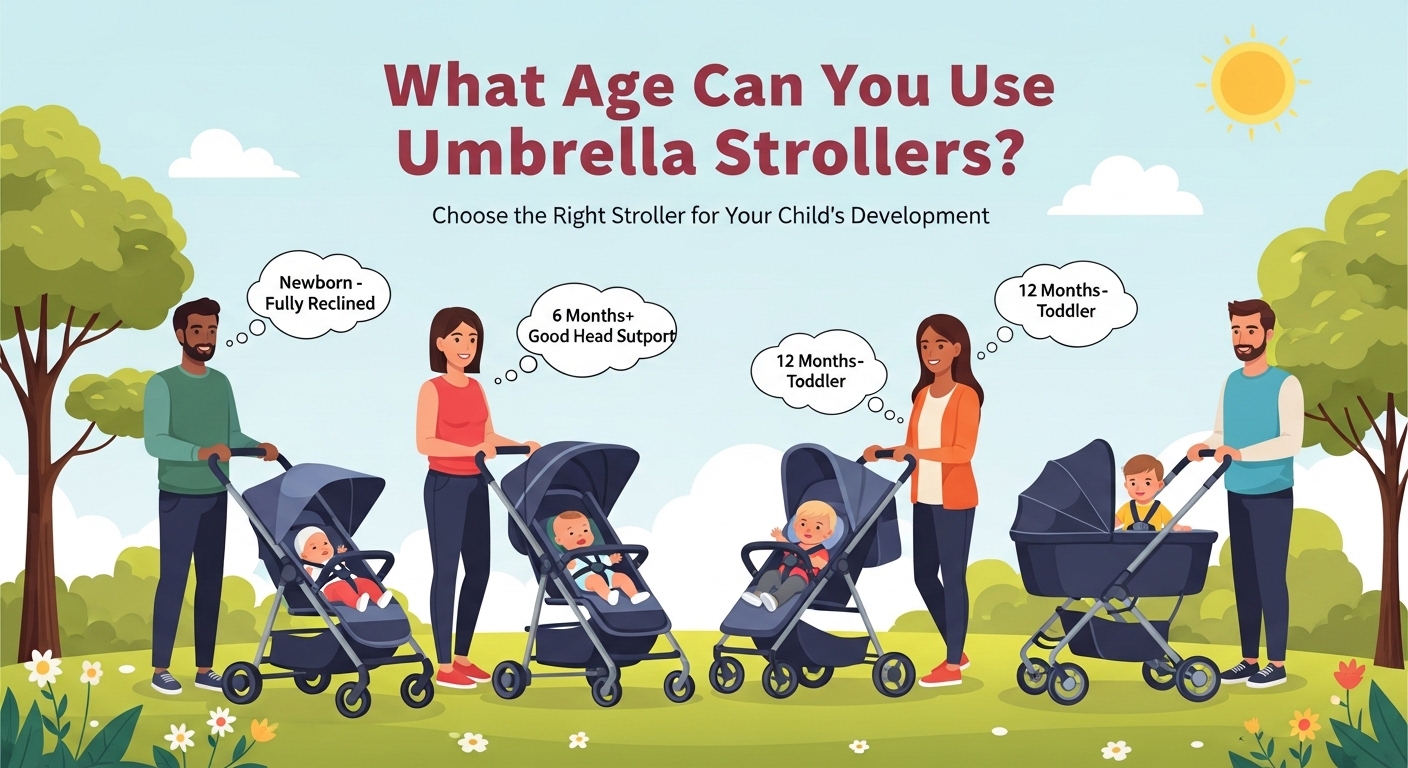
What age can you use umbrella stroller? Yeah, that question usually pops into your head right after your regular stroller starts feeling like you’re dragging a shopping cart full of bricks through a parking lot at 8 in the morning while your toddler suddenly decides walking is “too emotional today.” You stare at those tiny foldable umbrella strollers in stores and think, surely this thing can’t actually hold a real child. But somehow every airport parent on earth owns one.
The confusing bit is that umbrella strollers all kinda pretend to be the same when they really aren’t. Some are made for babies barely sitting up. Others are basically toddler taxis with cup holders and snack crumbs embedded forever into the seat seams. And if you use one too early, your baby’s neck and back support can become an issue real quick.
So if you’re standing there wondering whether your child is old enough, too big, too wiggly, or somehow both at once, you’re not overthinking it. Parents ask this constantly because the age recommendations are weirdly vague on packaging sometimes.
The Typical Age for an Umbrella Stroller
Most umbrella strollers are designed for babies around 6 months old and up. That’s the short answer people give online, though it leaves out the actually important detail: your baby needs solid head and neck control first.
Not all six-month-olds are the same. One baby sits upright like a tiny office manager reviewing quarterly reports, another still tips sideways like a sleepy potato. Manufacturers usually assume average physical development when they print age ranges.
Here’s a quick breakdown that makes more sense than vague labels:
| Baby Age | Umbrella Stroller Usually Safe? | Why |
|---|---|---|
| 0–3 months | No | Insufficient neck/spine support |
| 4–5 months | Sometimes, but only reclined models | Depends on development |
| 6 months+ | Usually yes | Better head and torso control |
| 1–4 years | Absolutely | Main age group for use |
| 5+ years | Depends on stroller weight limit | Many kids outgrow them |
According to guidance from pediatric experts and stroller manufacturers, babies should only ride in upright umbrella strollers once they can sit unsupported and control their head movements safely. Lightweight strollers without recline positions are especially unsuitable for newborns.
A lotta parents ignore the difference between “umbrella stroller” and “lightweight stroller,” but brands blur those lines too. Some modern umbrella strollers recline almost flat and can safely carry younger babies with proper support systems.
Why Newborns Usually Shouldn’t Use Umbrella Strollers
This is where marketing pictures get sneaky. You’ll sometimes see tiny babies sitting in these things looking all peaceful and cinematic, but real babies slump, wiggle, sneeze dramatically, and randomly fall asleep sideways.
Traditional umbrella strollers have:
- Minimal padding
- Limited recline
- Weak suspension
- Less head support
- Lightweight frames that jolt easier
A newborn’s spine is still developing. Their neck muscles aren’t strong enough to stabilize their head during movement over bumps, curbs, or uneven sidewalks. Even crossing a grocery store parking lot can become unexpectedly rattly. Tiny wheels plus cracked pavement equals chaos honestly.
The American Academy of Pediatrics has long emphasized proper head and neck support during infant transport. That doesn’t mean umbrella strollers are dangerous by default. It just means timing matters more than parents are often told.
Signs Your Baby Is Ready for an Umbrella Stroller
Forget age for a second. Development matters more.
Your child is probably ready if you notice these things consistently:
They Can Sit Upright Without Flopping
Not “sorta sitting while leaning on pillows.” Real independent sitting. If your baby folds sideways after ten seconds like laundry sliding off a couch, wait a little longer.
Head Control Is Strong
Watch how they react when excited or distracted. If their head stays stable while turning around, laughing, or bouncing slightly, that’s a good sign.
They Enjoy Looking Around
Umbrella strollers are more upright and open than bulky travel systems. Curious babies usually love them because they can see everything happening around them, even if “everything” is mostly pigeons and stressed adults.
They’ve Outgrown the Infant Car Seat Phase
At some point babies absolutely despise staying clipped into infant car seats outside the car. You’ll know. The complaints become theatrical.
Different Types of Umbrella Strollers Matter More Than You Think
Not every umbrella stroller works the same way, which is why parents get conflicting advice online.
Basic Umbrella Strollers
These are the ultra-light cheap ones.
Features usually include:
- Tiny wheels
- Minimal recline
- Thin fabric seat
- Super lightweight design
These are best for toddlers over 1 year old. They’re great for quick errands and travel but kinda terrible for younger babies.
Reclining Umbrella Strollers
These offer better support and are often suitable from 4–6 months depending on the model.
They typically include:
- Multi-position recline
- Better straps
- Sun canopy
- Extra padding
This type is what most parents actually mean nowadays when they say umbrella stroller.
Travel Umbrella Systems
Some lightweight travel strollers are compatible with infant car seats. These blur the line between umbrella stroller and compact stroller completely.
Honestly the stroller industry loves making categories confusing because every brand wants to invent a “new” type.
Weight Limits Are Just As Important As Age
Parents often focus only on age, then suddenly discover their three-year-old weighs more than the stroller allows. Awkward moment.
Most umbrella strollers support:
| Stroller Type | Typical Weight Limit |
|---|---|
| Basic umbrella stroller | 35–40 lbs |
| Premium lightweight stroller | 50–65 lbs |
| Travel stroller | 45–55 lbs |
A taller child may also feel cramped before hitting the official weight limit. Legs dangling awkwardly off the edge turns every ride into a complaint festival pretty fast.
Some newer models from brands like Summer Infant, UPPAbaby, and Baby Jogger offer surprisingly high weight capacities despite looking tiny.
Is an Umbrella Stroller Good for Travel?
This is honestly where umbrella strollers become legendary.
Airports are basically their natural habitat.
Parents love them because they:
- Fold quickly
- Weigh less
- Fit into overhead bins sometimes
- Are easier in crowds
- Make public transport less miserable
If you’ve ever tried carrying a tired toddler through a giant airport while also holding snacks, passports, random socks, and your own remaining patience, lightweight strollers start feeling like engineering miracles.
Travel Ages That Work Best
Most families get peak umbrella stroller use between:
- 9 months
- 4 years old
That’s the sweet spot where kids are mobile enough to walk sometimes but still become exhausted without warning. Toddlers have zero consistency. They’ll walk for forty minutes then suddenly collapse dramatically beside a vending machine.
Common Mistakes Parents Make
There’s a handful of umbrella stroller mistakes that happen over and over.
Switching Too Early
This one’s the biggest. Parents get tired of bulky infant systems and switch before baby has enough support strength.
Convenience shouldn’t beat physical readiness.
Hanging Heavy Bags on Handles
Umbrella strollers are lightweight, which means they tip backward easier. One overloaded diaper bag can transform the stroller into a tiny accidental catapult. Happens more than people admit.
Ignoring Wheel Quality
Cheap wheels struggle on rough sidewalks, gravel, grass, and uneven pavement. If you travel often or walk outdoors alot, wheel quality matters way more than cup holders.
Forgetting Nap Comfort
Some toddlers nap anywhere. Others need recline support or they become overtired gremlins by afternoon.
Can a 3-Month-Old Use an Umbrella Stroller?
Usually no, unless the stroller specifically supports newborn use and reclines nearly flat.
Traditional umbrella strollers don’t provide enough spinal support for very young infants. A fully reclining lightweight stroller with infant compatibility is different entirely.
Parents sometimes assume adding blankets or inserts solves the issue. It really doesn’t fully replace structural support designed into the stroller itself.
If your baby is under 6 months old, check:
- Recline angle
- Infant compatibility
- Head support
- Manufacturer guidelines
- Pediatrician recommendations if unsure
What Pediatricians Usually Recommend
Pediatricians generally focus less on the stroller category and more on posture, support, and physical readiness.
Most recommendations boil down to this:
If your baby cannot sit independently with steady head control, wait before using a standard umbrella stroller.
That advice stays pretty consistent across child development guidance.
A 2023 consumer stroller survey by juvenile product safety researchers found that stability, harness security, and recline support were among the top features parents underestimated when purchasing lightweight strollers. Funny enough, parents ranked “easy folding” highest before using the stroller, then ranked “comfort” highest after six months of ownership. Thats kinda relatable.
Pros and Cons of Umbrella Strollers
Pros
- Lightweight and portable
- Easier storage
- Great for travel
- Quick folding
- Usually cheaper
Cons
- Less storage space
- Rougher ride
- Smaller wheels
- Less padding
- Not ideal for newborns
It’s really about lifestyle. City parents, frequent travelers, and errand-heavy families often adore umbrella strollers. Parents doing long outdoor walks sometimes prefer sturdier full-size strollers longer.
How Long Can You Keep Using an Umbrella Stroller?
Some kids use them until age 4 or 5.
Not because they can’t walk, but because small humans become unexpectedly exhausted at the worst possible times. Theme parks especially expose this truth brutally. A child who “never uses strollers anymore” will suddenly demand one after seven hours of walking in heat while holding a melting snack they insisted on buying.
Signs your child has outgrown the umbrella stroller:
- Knees bend awkwardly
- Head extends above seat excessively
- Weight exceeds limit
- Complaints about comfort increase
- Steering becomes difficult
Sometimes the stroller technically still works, but the experience becomes annoying enough that it’s no longer worth bringing.
Features Worth Looking For Before Buying
If you’re shopping for one now, don’t just buy the cheapest option instantly. Some of them feel like lawn chairs attached to shopping cart wheels.
Features actually worth paying attention to:
| Feature | Why It Matters |
|---|---|
| Recline seat | Better naps and younger baby support |
| Five-point harness | Safer positioning |
| Sun canopy | Important outdoors |
| Storage basket | Huge convenience |
| Larger wheels | Smoother ride |
| Lightweight frame | Easier travel |
| One-hand fold | Helpful while holding baby |
Parents often regret tiny storage baskets more than they expect. Suddenly you’re carrying cups, wipes, crackers, toy dinosaurs, and one mysterious sticky object with nowhere to put any of it.
Final Thoughts on What Age Can You Use Umbrella Stroller
So, what age can you use umbrella stroller safely? For most babies, around 6 months is the realistic starting point, though it depends more on development than birthdays. Good head control and independent sitting matter way more than the number of candles on a half-eaten baby cake.
The funny thing is parents often buy umbrella strollers thinking they’ll use them occasionally, then end up dragging them literally everywhere for years. Airports, malls, zoos, vacations, quick grocery runs, weirdly long school events, neighborhood walks that somehow become emotional negotiations. They sneak into daily life quietly.
And honestly, once you fold a bulky stroller for the seventeenth time in a cramped car trunk, those flimsy little umbrella strollers suddenly start looking genius in a slightly ridiculous way.

Thomasjames is a stroller expert blogger sharing honest reviews, practical guides, and parenting tips, helping families choose safe, comfortable, high-quality baby strollers with confidence.