
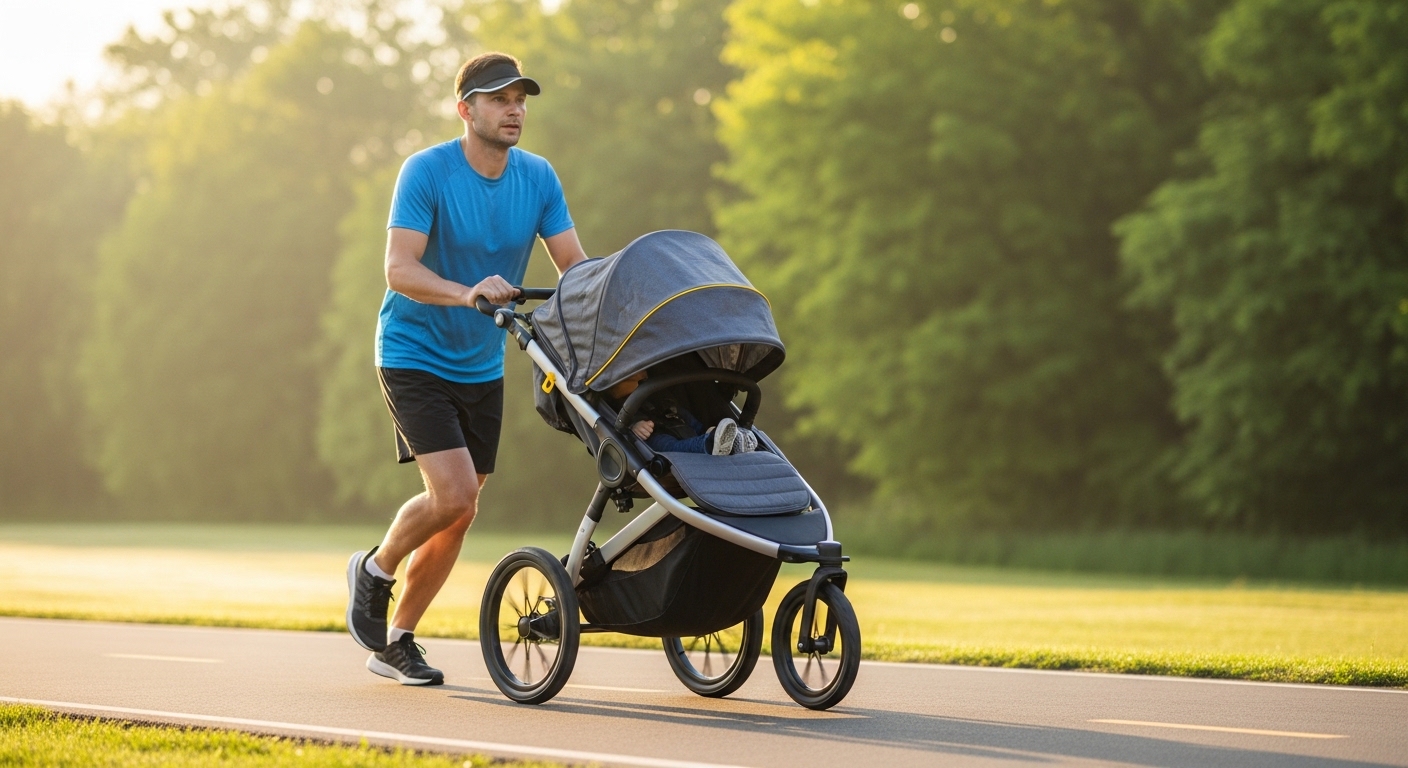
You’ve probably typed what is a jogging stroller after seeing one zoom past you in the park and thinking, wait… is that thing even safe or just… fast for no reason? Yeah, that moment where you’re half curious, half confused, and kinda wondering if your regular stroller is suddenly… not enough. I get it, because the first time I saw one, I honestly thought it was just a fancy stroller with bigger wheels, turns out it’s a bit more than that, like not wildly complicated, but also not as simple as it looks.
A jogging stroller isn’t just about running, even tho the name screams it. It’s built for movement, like real movement, the kind where sidewalks aren’t always smooth and your kid still needs to stay comfy while you’re pushing at a pace that feels… slightly too fast for comfort at first.
So… What Exactly Is a Jogging Stroller?
A jogging stroller is basically a stroller designed for parents who want to move faster than a casual walk, but also don’t wanna compromise on safety or comfort. It usually comes with three wheels instead of four, which sounds like less stability, but weirdly it’s the opposite because of how those wheels are designed and spaced.
The front wheel is often either fixed or can lock into place, which helps keep the stroller going straight when you’re running. If it spun freely at high speed, you’d probably end up zig-zagging like you just learned how to walk, which… not ideal with a baby onboard.
Key Features That Make It Different
You might think, okay cool, wheels are bigger, done. But nah, there’s a bunch of small details that kinda matter more than you expect.
- Large Air-Filled Tires
These absorb shocks from uneven surfaces. Grass, gravel, cracked sidewalks… all feel less annoying. - Suspension System
Some models have actual suspension, like mini shock absorbers, so your baby doesn’t bounce like popcorn. - Hand Brake + Wrist Strap
The wrist strap stops the stroller from rolling away if you lose grip, which sounds dramatic but is actually very practical. - Reclining Seat
Babies fall asleep mid-run sometimes, which is both cute and slightly inconvenient if the seat doesn’t recline. - Lightweight Frame
Compared to bulky strollers, these are usually easier to push fast, tho not always easy to fold, just saying.
Jogging Stroller vs Regular Stroller
You don’t really notice the difference until you try pushing both on the same path. Then it hits you, like oh… this is smoother, or oh… this is annoying.
| Feature | Jogging Stroller | Regular Stroller |
|---|---|---|
| Wheels | 3 large wheels | 4 smaller wheels |
| Terrain | Rough + smooth | Mostly smooth surfaces |
| Speed | Designed for running | Designed for walking |
| Suspension | Often included | Rare |
| Weight | Slightly heavier | Lighter (usually) |
| Maneuverability | Straight-line stability | Better for tight turns |
The table looks neat, but real life is messier. Sometimes a regular stroller feels easier in crowded places, while a jogging stroller feels like overkill in a mall, honestly.
When Do You Actually Need One?
Not everyone needs a jogging stroller, and that’s fine. You don’t suddenly become a worse parent if you don’t own one, despite what some fitness influencers might imply.
You might want one if:
- You like running or brisk walking regularly
- Your area has uneven sidewalks or trails
- You hate struggling with small wheels getting stuck everywhere
- You want something that lasts longer as your child grows
But if you mostly go to nearby shops or short walks, a regular stroller does the job just fine, maybe even better sometimes.
Is It Safe for Babies?
This is where people get a bit nervous, and honestly, fair enough. You’re moving faster, so safety matters more.
Most pediatricians suggest waiting until your baby is around 6 to 8 months old before using a jogging stroller for running. That’s when they have better neck and head control. Before that, you can still use it for walking, just not running like you’re training for a marathon.
Safety Tips That Actually Matter
- Always use the 5-point harness
- Lock the front wheel before running
- Use the wrist strap (seriously, don’t skip it)
- Avoid steep downhill paths at high speed
- Check tire pressure regularly, sounds boring but it helps
A study published in the journal Academic Pediatrics found that stroller-related injuries often come from tipping or improper use, not the stroller type itself. So yeah, how you use it matters more than what you use sometimes.
Pros and Cons of a Jogging Stroller
Nothing is perfect, and jogging strollers are no exception. They solve some problems, create others, like most things in life.
Pros
- Smooth ride on rough terrain
- Easier to push at higher speeds
- More durable over time
- Better for outdoor activities
Cons
- Bulky and harder to store
- Not great in tight indoor spaces
- Usually more expensive
- Folding can feel like solving a puzzle sometimes
Real-Life Example (Because Specs Are Boring)
Imagine you’re walking on a cracked sidewalk with a regular stroller. Every bump feels like a mini obstacle, and you keep adjusting your grip. Now switch to a jogging stroller, suddenly it glides more, like it actually wants to move forward instead of resisting you every few seconds.
It’s not magic, but it kinda feels like it at first.
Common Myths About Jogging Strollers
People say stuff that sounds true but isn’t always accurate.
“They’re Only for Runners”
Not really. You can use them for everyday walks, especially if your area isn’t perfectly paved. You don’t need to be super athletic or anything.
“They’re Dangerous”
They can be, if used incorrectly. But so can regular strollers. It’s more about how you use them than what you buy.
“They Replace Regular Strollers”
Honestly, not always. Many parents end up using both, depending on where they’re going. One for outdoors, one for quick errands.
How to Choose the Right Jogging Stroller
You don’t wanna just pick the first one that looks cool. There are a few things you should actually check, even if it feels like overthinking a bit.
What to Look For
- Wheel Type: Fixed front wheel for running, swivel for flexibility
- Weight Capacity: Make sure it supports your child’s growth
- Fold Mechanism: Test it if you can, some are annoyingly complex
- Handlebar Height: Adjustable is better, especially if you’re tall or short
- Storage Space: You’ll need room for snacks, diapers, random stuff
Budget Range (Rough Idea)
| Price Range | What You Get |
|---|---|
| $100–$200 | Basic features, decent quality |
| $200–$400 | Better suspension, smoother ride |
| $400+ | Premium build, advanced features |
Spending more doesn’t always mean better for you, depends on how you’ll use it.
Maintenance Tips (Because Things Break, Eventually)
Jogging strollers are built tough, but not invincible. A little care goes a long way.
- Clean wheels after muddy runs
- Check brakes every few weeks
- Tighten loose screws occasionally
- Store indoors to avoid wear
Ignoring these small things usually leads to bigger annoyances later, which you def don’t want.
Final Thoughts
So, what is a jogging stroller? It’s not just a faster stroller, and not just a trend either. It’s something that makes movement easier, smoother, and honestly a bit more enjoyable when you’re out with your kid. But it’s not for everyone, and that’s perfectly fine.
If you’re someone who enjoys being active, or even just hates struggling with rough paths, it might actually change how you feel about going outside with your baby. If not, your regular stroller isn’t suddenly outdated or useless, despite what ads might suggest.
At the end of the day, it’s less about the stroller and more about how you use it, where you go, and what feels right for you, even if that choice feels a bit random at first.

Thomasjames is a stroller expert blogger sharing honest reviews, practical guides, and parenting tips, helping families choose safe, comfortable, high-quality baby strollers with confidence.