
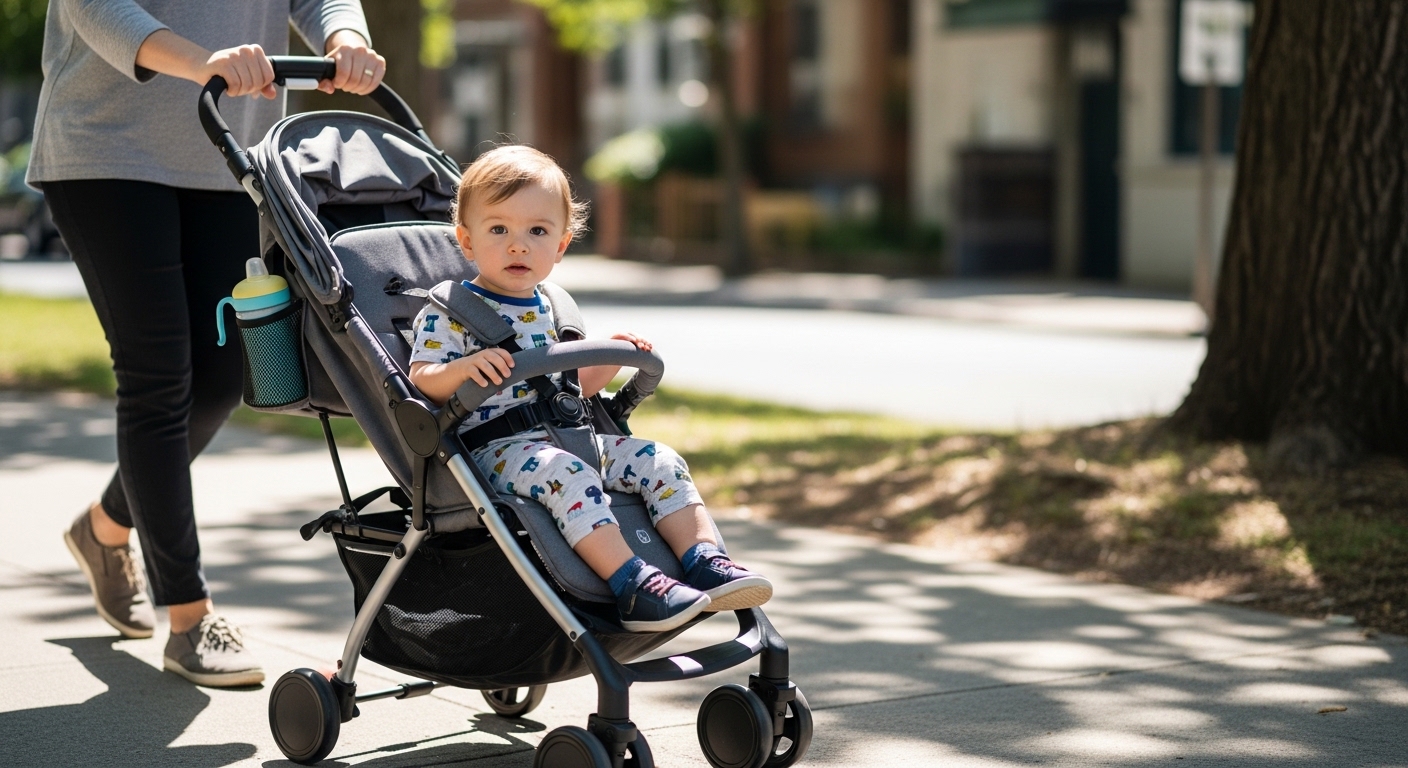
You’re probably here because you keep wondering when can baby go in umbrella stroller without it feeling like you’re doing something slightly risky, like giving them a tiny seat before they’re ready, and yeah… that hesitation is very real. One day your baby looks sturdy-ish, the next day they flop like a sleepy noodle, so it gets confusing fast, honestly.
Umbrella strollers look simple, almost too simple, and that’s exactly why parents second-guess them. They’re lightweight, easy to fold, kind of tempting to use early, but there’s a bit more going on under the surface than it first seems.
The Short Answer (But Not Too Short)
Most babies can go in an umbrella stroller around 6 months old, give or take a few weeks, but that number isn’t a magical switch that flips overnight, even if it would be nice if it did.
What really matters is not just age, it’s whether your baby can:
- Sit upright without support
- Hold their head steady for long periods
- Stay balanced when the stroller moves slightly
- Show decent neck and core strength
Some babies hit this stage at 5 months-ish, others closer to 7 months, and both are completely normal, even if it feels like everyone else’s baby is “ahead.”
Why Umbrella Strollers Aren’t Newborn-Friendly
You might look at an umbrella stroller and think, “it’s just a seat with wheels, how bad could it be,” but actually, that simplicity is the exact reason it’s not for newborns.
Umbrella strollers usually:
- Don’t fully recline
- Lack strong head and neck support
- Offer minimal padding
- Have a more upright seating angle
Newborns, on the other hand, are basically tiny humans who can’t control their head properly yet, so placing them in an upright seat can strain their neck in ways you don’t see immediately, which is the tricky part.
Pediatric safety guidance, including from organizations like the American Academy of Pediatrics, emphasizes proper head and spine support in early months, and umbrella strollers just don’t provide that in most cases.
Signs Your Baby Is Ready (More Important Than Age)
You could wait until 6 months exactly, but honestly, it’s better to watch your baby instead of the calendar, because babies don’t read timelines.
Here’s what readiness actually looks like:
Strong Head Control
Your baby should hold their head steady even when you gently move them or when they look around quickly. No wobbling like a bobblehead, more like… stable-ish.
Sitting With Minimal Support
If your baby can sit with just a little help (like a cushion behind them), you’re getting close. Full independent sitting is even better.
Curious, Upright Posture
You’ll notice they want to sit up and look around. They lean forward, twist, observe everything like a tiny investigator.
No Slumping Forward
When placed in a seated position, they shouldn’t collapse forward after a few seconds. That’s a sign their core isn’t ready yet.
What Happens If You Use It Too Early?
This is where parents get nervous, and not without reason. Using an umbrella stroller too early doesn’t usually cause immediate harm, but it can create subtle issues.
Possible risks include:
- Neck strain due to weak muscles
- Poor spinal alignment
- Discomfort leading to fussiness
- Increased slouching posture habits
It’s not like one short ride will ruin everything, but repeated use before readiness isn’t ideal, and yeah, it’s better to avoid that grey area.
Types of Umbrella Strollers (They’re Not All the Same)
Not all umbrella strollers are equal, even if they kinda look the same in a store aisle.
Basic Umbrella Strollers
These are the classic lightweight ones:
- Minimal recline (or none)
- Very light frame
- Best for older babies and toddlers
Reclining Umbrella Strollers
These are slightly more advanced:
- Partial recline
- Better support
- Can sometimes be used closer to 5–6 months
Umbrella Strollers With Infant Support (Rare)
Some models include:
- Extra padding
- Head support inserts
- More recline
Even then, always double-check the manufacturer’s guidelines, because marketing can be a bit… optimistic sometimes.
Quick Comparison Table
| Feature | Umbrella Stroller | Full-Size Stroller |
|---|---|---|
| Newborn Safe | No | Yes |
| Recline Level | Limited | Full |
| Weight | Very Light | Heavier |
| Portability | Excellent | Moderate |
| Support for Baby | Basic | High |
You can see why umbrella strollers are more of a “second stage” option rather than a starting point.
When Parents Usually Switch (Real-Life Patterns)
Here’s something interesting, most parents don’t switch the exact day their baby turns 6 months, that would be too neat, right?
In real life:
- Some switch at 5.5 months when baby seems strong
- Many switch between 6–7 months
- Others wait until 8 months for extra confidence
A small survey by parenting groups often shows that around 70% of parents start using umbrella strollers between 6 and 8 months, which kinda confirms that flexible window idea.
Tips for First-Time Use (Don’t Skip These)
The first time you put your baby in an umbrella stroller, it might feel oddly stressful, like you’re testing something.
Here’s how to make it smoother:
- Start with short walks, not long outings
- Check posture every few minutes
- Use the safety harness properly (not loosely, not overly tight)
- Avoid rough terrain at first
- Watch for signs of discomfort or slouching
And yeah, you’ll probably keep adjusting them every 2 minutes at the start, that’s normal.
Common Mistakes Parents Make
It happens more often than you’d think, even careful parents slip into these habits.
Using It Too Soon
The biggest one, obviously. It’s tempting because the stroller is so convenient.
Assuming All Models Are Safe at 6 Months
Some require closer to 7 months, depending on design.
Ignoring Baby’s Posture
If your baby is leaning sideways or forward, that’s a signal, not just a cute moment.
Skipping the Harness
Even for short walks, always use it. Babies move unpredictably, like suddenly, out of nowhere.
Can You Use Accessories to Make It Safer?
You might think adding cushions or head supports will “fix” the early-use problem, but it doesn’t fully solve it.
Accessories can:
- Improve comfort
- Add slight support
But they don’t replace muscle development, which is the real requirement here.
So yeah, they help, but they don’t change the minimum readiness stage.
What Pediatric Experts Usually Recommend
Most pediatric advice leans toward caution, which makes sense when you think about how delicate early development is.
General guidance includes:
- Wait until baby has strong head and neck control
- Prefer fully reclining strollers before 6 months
- Avoid prolonged upright seating in early infancy
Doctors don’t usually give an exact “umbrella stroller age,” because development varies too much, but the 6-month guideline exists for a reason.
If You’re Still Not Sure
Sometimes your baby is right on the edge, not clearly ready, not clearly unready, and that’s where it gets annoying, honestly.
In that case:
- Try sitting them in the stroller at home first
- Observe how they hold themselves
- Let them sit for a few minutes only
- Watch for slouching or fatigue
If they seem stable and comfortable, you’re likely close enough to start using it in short bursts.
Final Thoughts That Actually Matter
So when can baby go in umbrella stroller? Around 6 months is the general idea, but your baby’s strength matters more than the number, even if numbers feel easier to follow.
You’re not being overprotective for asking this, by the way. That little pause you have before switching strollers, that’s just you trying to get it right, and honestly, that’s already a good sign you probably will.
If your baby sits strong, holds their head steady, and seems curious about the world while upright, you’re likely good to go, just ease into it, don’t rush the long walks yet.

Thomasjames is a stroller expert blogger sharing honest reviews, practical guides, and parenting tips, helping families choose safe, comfortable, high-quality baby strollers with confidence.