
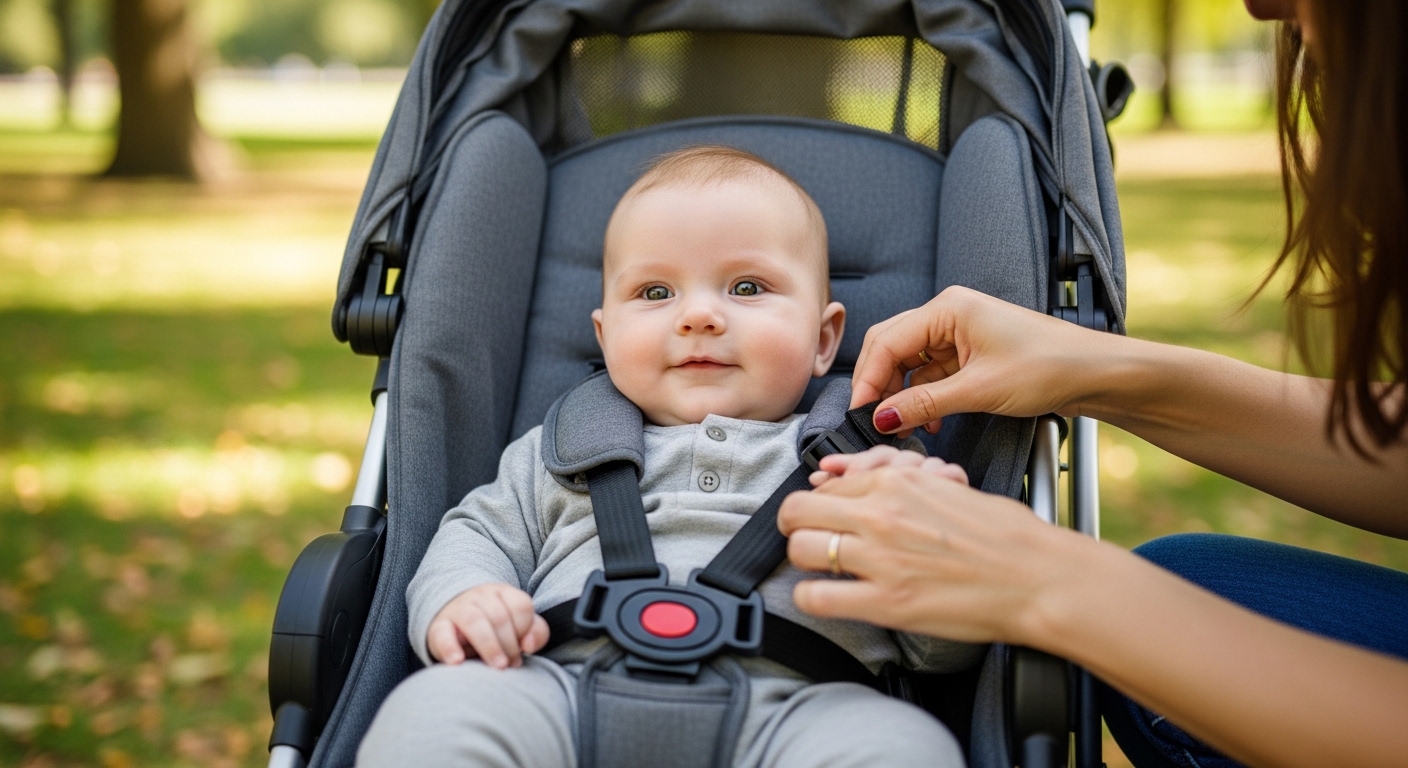
When can baby sit in regular stroller? Yeah, that question usually pops into your head right after your arms start feeling like cooked noodles from carrying the car seat everywhere. One day your newborn seems tiny and folded like laundry, then suddenly they’re trying to look around at every leaf, dog, and passing grocery cart. You start wondering if the bulky infant setup can finally retire already.
The tricky part is, stroller companies all say slightly different things, your aunt says “we used strollers from day one and survived,” and the internet somehow makes a simple seat feel like a NASA launch requirement. So if you’re staring at your baby thinking, “okay but are you stable enough yet?” — you’re not overthinking it. Well maybe a little, but in a normal parent kinda way.
This guide breaks down exactly when babies can safely sit in a regular stroller, what signs matter more than age alone, and how to avoid moving too early. Some babies are ready faster, some need extra time. Tiny humans do not read milestones charts, honestly.
What Is a Regular Stroller Anyway?
A “regular stroller” usually means a standard stroller seat where your baby sits more upright instead of lying flat in a bassinet or clicking into an infant car seat. These strollers are designed for older babies who have decent neck and trunk control.
You’ll usually see three stroller categories:
| Stroller Type | Best For | Typical Age |
|---|---|---|
| Bassinet stroller | Newborns lying flat | Birth to 4-6 months |
| Travel system with infant seat | Babies still using car seat | Birth to around 12 months |
| Regular stroller seat | Babies sitting upright | Around 6 months+ |
Here’s the confusing part though — some “regular” strollers recline fully, which means they can technically be used earlier. Others are very upright and absolutely not meant for floppy newborn bodies. Tiny difference on paper, big difference in real life.
Most Babies Are Ready Around 6 Months
Pediatricians and stroller manufacturers commonly recommend waiting until around 6 months before using a regular stroller seat. That’s because most babies develop enough head and neck control around this age.
According to the American Academy of Pediatrics, babies need adequate neck strength and postural stability before sitting upright for extended periods. A baby who still slumps sideways or struggles holding their head steady can have airway issues in an upright seat position.
But honestly, age alone doesn’t tell the whole story. Some babies at 5 months are practically tiny gymnasts. Others at 7 months still wobble like sleepy jelly.
Signs Your Baby Is Ready for a Regular Stroller
Instead of obsessing over exact age, look for these physical signs:
- Holds head up steadily without bobbing
- Sits with minimal support
- Doesn’t slump heavily to one side
- Can tolerate upright positioning comfortably
- Seems curious and engaged during walks
- Has decent core strength
If your baby folds forward like a sandwich after two minutes, wait a little longer. That’s usually your answer right there.
Why Head Control Matters So Much
This part sounds dramatic until you actually see a newborn’s neck strength. Which is basically nonexistent at first.
Babies who can’t hold their heads upright may:
- Experience airway restriction
- Slump into unsafe positions
- Struggle breathing comfortably
- Become overstimulated or exhausted quickly
A regular stroller bumps, tilts, turns curbs, rolls over uneven sidewalks, and sometimes jerks unexpectedly when you stop fast because someone’s unleashed dog suddenly appears. Your baby needs enough muscle control to handle all that motion safely.
It’s not about perfection. Your baby doesn’t need Olympic posture. They just need enough stability that the ride isn’t physically stressful.
Can You Use a Reclining Stroller Earlier?
Actually yes, sometimes.
Many modern strollers have near-flat recline positions designed for younger infants. If the stroller specifically says “newborn compatible,” you may use it before 6 months. Always check manufacturer guidelines because each model differs.
Here’s a quick breakdown:
| Recline Type | Safe for Newborns? |
|---|---|
| Fully flat recline | Usually yes |
| Partial recline only | Usually no |
| Upright seat only | Wait until baby can sit well |
Some parents think adding extra blankets or cushions makes an upright stroller newborn-safe. It doesn’t really. Loose positioning accessories can actually increase risk if they shift around.
A weird thing nobody mentions enough — babies often look “fine” in positions that are secretly uncomfortable. They may not cry immediately. That’s why posture matters more than mood sometimes.
When Can Baby Sit in Forward-Facing Stroller Seats?
This is another layer people get confused about.
A baby may technically be ready for a regular stroller seat but still do better parent-facing first. Many stroller seats can switch directions, and younger babies often feel calmer seeing your face.
Forward-facing becomes more enjoyable once your baby:
- Loves looking around
- Has stronger sitting balance
- Handles stimulation well
- Seems bored facing inward
Usually this happens between 6 and 9 months, though every baby is wildly different honestly. Some babies wanna observe the whole universe immediately. Others act personally betrayed by wind touching their cheeks.
What Happens If You Move Too Early?
Usually nothing catastrophic happens from one short supervised stroll, but consistently placing a baby in a stroller before they’re physically ready can cause discomfort and poor positioning.
Possible issues include:
- Head flopping forward
- Slouching
- Breathing discomfort
- Neck strain
- Increased fussiness
- Fatigue during outings
One small study published in the journal Acta Paediatrica observed that young infants in semi-upright devices may experience reduced oxygen saturation in certain positions. That doesn’t mean strollers are dangerous overall, but positioning absolutely matters.
So if your instincts say your baby still seems too floppy, trust that feeling a bit.
How Long Should a Young Baby Stay in a Stroller?
Even babies who are ready shouldn’t stay seated upright forever.
For younger infants around 6 months:
- Shorter walks are better initially
- Give movement breaks during long outings
- Check posture frequently
- Avoid letting baby sleep in awkward seated positions for hours
This gets overlooked a lot because once babies tolerate the stroller, parents suddenly feel free again. Which makes sense. Freedom tastes incredible after months of baby logistics.
But prolonged container time — strollers, swings, car seats, loungers — can still limit movement opportunities if overused daily.
Stroller Safety Tips Parents Forget
Some stroller mistakes are weirdly common, especially when everyone’s tired.
Always Use the Harness
Even babies who “can’t climb out yet” should be buckled properly. Babies develop chaos skills overnight, seriously. One day they’re stationary potatoes. Next day they’re leaning sideways like stunt performers.
Use all harness points snugly every time.
Watch for Poor Posture
Your baby shouldn’t:
- Chin-drop onto chest
- Lean heavily sideways
- Look compressed
- Slide downward constantly
Adjust recline if needed.
Avoid Heavy Bags on Handles
A diaper bag hanging from stroller handles can tip the stroller backward unexpectedly. Happens faster than you’d think too.
Be Careful With Car Seat Sleep
Many parents transfer sleeping babies from the car into a stroller travel system. Totally understandable. Just remember car seats are designed for travel, not all-day sleep spaces.
If your baby sleeps for a long time during walks, reposition them periodically and monitor airflow.
Do Lightweight Umbrella Strollers Work for Babies?
Usually not for younger babies.
Most umbrella strollers:
- Have minimal recline
- Offer less support
- Work best after 6 months
- Sometimes require babies closer to 9 months
They’re lightweight and convenient, but they’re not ideal for babies still mastering sitting balance.
A lotta parents buy one too early because carrying a giant stroller feels ridiculous after awhile. Then they realize the baby keeps sliding sideways like melting ice cream.
Questions Parents Secretly Worry About
“My baby is big for their age. Can I switch sooner?”
Size doesn’t equal muscle control. A chunky 4-month-old may still lack neck stability even if they look sturdy.
Focus on development instead.
“What if my baby hates lying flat?”
Some babies really do protest bassinet positions. You can often try a slightly elevated recline safely if your stroller allows newborn use. Just avoid fully upright positioning too soon.
“Can baby nap in a regular stroller?”
Yes, once they’re developmentally ready and properly positioned. Reclining the seat during naps helps support the neck better.
“Do jogging strollers work for younger babies?”
Most manufacturers recommend waiting until around 6 to 8 months before jogging with a baby, sometimes longer. Babies need strong neck control to tolerate the motion and vibration safely.
Real-Life Signs You’re Probably Ready
Honestly, most parents know before they officially “know.”
You’ll notice:
- Your baby tries pulling upright constantly
- They get frustrated lying flat
- They crane their neck to see everything
- Walks become more interactive
- They seem happier sitting supported
That’s usually when the transition starts feeling natural instead of nerve-wracking.
And weirdly enough, your first regular stroller walk feels emotional sometimes. Tiny milestone. Suddenly your baby looks less like a curled-up newborn and more like a little person watching the world happen.
It sneaks up on you a bit.
Best Age Range for Switching to a Regular Stroller
Here’s the simplest answer overall:
| Baby Development | Typical Timing |
|---|---|
| Full newborn support needed | Birth to 4 months |
| Partial recline may work | 4 to 6 months |
| Regular stroller readiness | Around 6 months |
| Lightweight umbrella stroller | 6 to 9+ months |
Again though, development matters more than exact birthdays.
Final Thoughts on When Can Baby Sit in Regular Stroller
When can baby sit in regular stroller safely? For most babies, around 6 months is the sweet spot, especially once they can hold their head steady and sit with decent support. But your baby’s actual physical readiness matters way more than some random milestone chart online.
You don’t need to rush it. Babies spend such a short time in that floppy newborn stage anyway, even though it somehow feels endless when you’re carrying seventeen pounds of gear into a grocery store.
Watch your baby’s posture. Watch their comfort. Trust what you’re seeing with your own eyes a little more than internet panic threads. If your baby looks stable, curious, comfortable, and supported, you’re probably moving in the right direction.

Thomasjames is a stroller expert blogger sharing honest reviews, practical guides, and parenting tips, helping families choose safe, comfortable, high-quality baby strollers with confidence.