
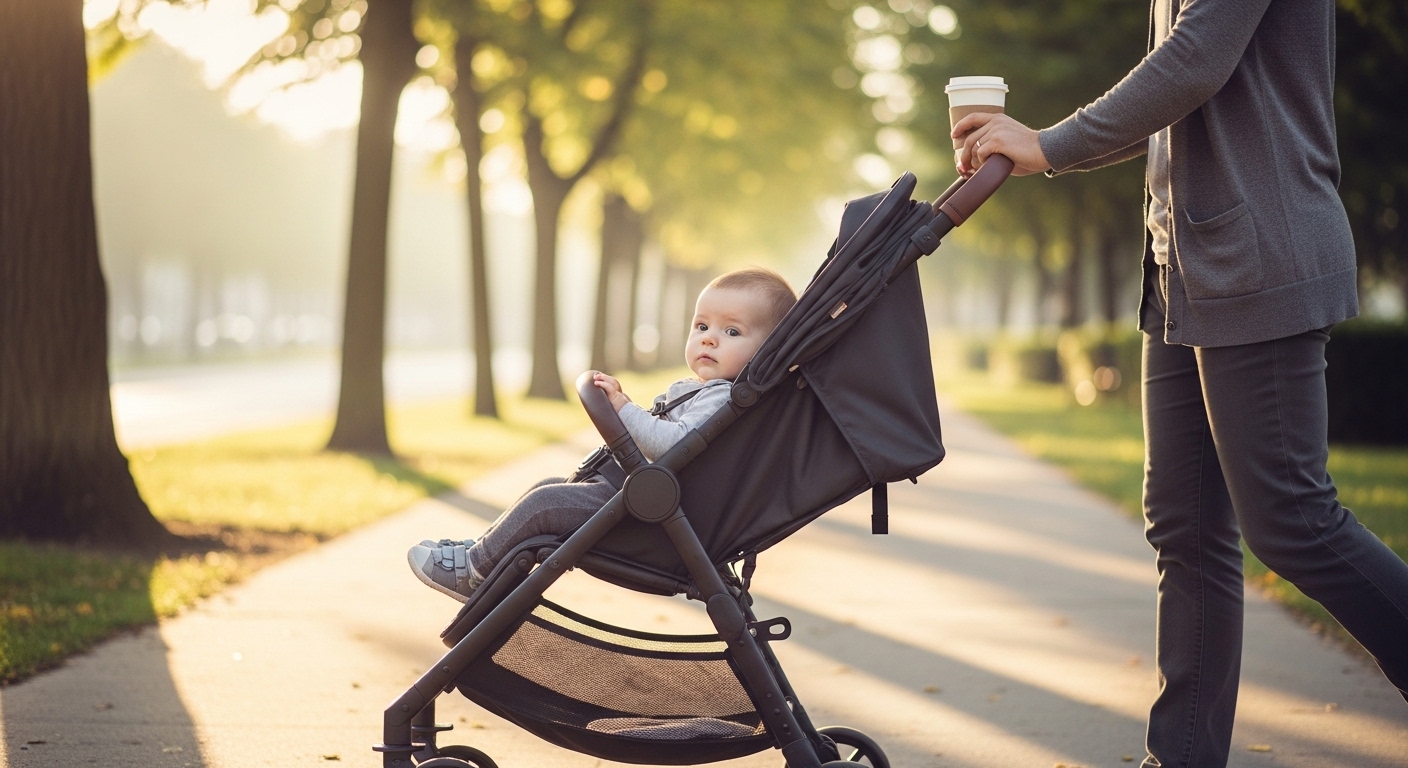
When can baby use umbrella stroller? Yeah, that question usually pops into your head right after your arms start feeling like boiled noodles from carrying a chunky infant car seat through a parking lot that somehow keeps getting farther every week. You look at those tiny foldable strollers in stores and think, “surely my baby can sit in that now?” then suddenly somebody online says “not before six months” while another parent swears they used one at three months and “everything was fine.” So now you’re standing there confused, maybe mildly annoyed, maybe googling at 2 a.m. while your baby refuses to sleep unless held upright like a tiny CEO.
Truth is, umbrella strollers are convenient almost to a suspicious degree. They fold skinny, fit into weird car trunks, and weigh less than some diaper bags. But babies don’t all develop on the same schedule, which is where things gets messy. Age matters, yes, though head control matters more than most people realize.
This guide breaks down exactly when a baby can safely use an umbrella stroller, what pediatricians usually recommend, how to spot if your child is ready, and which mistakes parents kinda accidentally make without noticing.
What Age Can a Baby Use an Umbrella Stroller?
Most babies can safely use a standard umbrella stroller around 6 months old. That’s the age many stroller manufacturers and pediatric experts recommend because babies usually develop enough neck and upper body control by then.
Still, “6 months” isn’t some magical birthday where suddenly your baby transforms into a sturdy little traveler. Some babies are ready slightly earlier. Others honestly still wobble around like sleepy jellybeans at seven months.
Here’s the general guideline most brands follow:
| Baby Age | Umbrella Stroller Suitability |
|---|---|
| 0–3 months | Usually not safe |
| 3–5 months | Only if stroller fully reclines |
| 6+ months | Safe for most babies |
| 9+ months | Ideal age for regular umbrella strollers |
According to guidance from the American Academy of Pediatrics, infants need sufficient head and neck control before sitting in upright seating equipment for longer periods. That includes lightweight strollers.
A regular umbrella stroller does not provide the deep support newborns require. That’s the important bit people skip over on social media videos.
Why Umbrella Strollers Aren’t Great for Newborns
Newborns look compact, but physically they’re astonishingly fragile in this specific way. Their neck muscles are underdeveloped, their spine is still curving naturally from the womb position, and their head is proportionally huge compared to the rest of the body. Tiny humans are built kinda weird honestly.
Most umbrella strollers are designed for portability, not infant support. That means:
- Minimal padding
- Less suspension
- More upright seating
- Weak head support
- Lightweight frames that jiggle more
If you place a newborn in a stroller that doesn’t recline fully flat, the baby’s head can slump forward. That position may partially restrict airflow. Pediatricians sometimes call this positional asphyxia risk, and while it sounds dramatic, it’s a real safety concern.
The Recline Angle Actually Matters
A fully reclining stroller keeps your baby’s airway in a safer position. Many umbrella strollers only recline slightly, which works fine for older infants but not younger babies.
This is why you’ll notice some stroller manuals saying:
“Suitable from 6 months and up.”
Manufacturers are not being overly cautious just for legal reasons. The stroller design itself matters.
Signs Your Baby Is Ready for an Umbrella Stroller
Age is helpful, but developmental milestones tell you way more.
Your baby is probably ready for an umbrella stroller if they can:
- Hold their head up steadily
- Sit with minimal support
- Stay upright without slumping sideways
- Tolerate bumps without losing posture
- Show strong neck control during movement
One weirdly useful test? Watch your baby during diaper changes. If they lift their head confidently and look around like a curious meerkat instead of flopping backward instantly, that’s usually a good sign their neck muscles are improving.
Another clue: if tummy time no longer feels like emotional warfare every single day, you’re getting closer.
Can a 3-Month-Old Use an Umbrella Stroller?
Usually no, unless the stroller is specifically designed for younger infants and reclines nearly flat.
Some modern umbrella strollers advertise “newborn compatible,” though technically those function more like lightweight travel systems than traditional umbrella strollers.
Here’s where marketing gets slippery. Companies use phrases like:
- Infant-friendly
- Birth-ready
- Newborn safe
- Suitable from birth
But you still need to check:
- Recline position
- Head support
- Harness system
- Manufacturer weight recommendations
A three-month-old generally lacks the core strength for upright stroller seating. Even if they seem “strong,” long walks can tire them quickly and cause slouching.
Difference Between Umbrella Strollers and Regular Strollers
A lot of parents compare them without realizing they serve different purposes entirely.
| Feature | Umbrella Stroller | Full-Size Stroller |
|---|---|---|
| Weight | Very light | Heavier |
| Foldability | Compact | Bulky |
| Infant Support | Limited | Better |
| Storage Basket | Small | Large |
| Suspension | Basic | Better shock absorption |
| Travel Use | Excellent | Moderate |
| Everyday Long Use | Sometimes | Better overall |
Umbrella strollers are basically the “grab-and-go snack” version of baby transportation. Useful, simple, convenient. But not always the best long-haul option for tiny infants.
What Pediatricians Usually Recommend
Pediatricians mostly focus on one thing: posture support.
Dr. Karen Sokal-Gutierrez, a pediatric expert associated with the University of California, Berkeley, has discussed how infant positioning devices should support natural spinal alignment and airway safety during early development.
Most pediatric advice lines up with these recommendations:
- Wait until strong head control develops
- Avoid prolonged upright sitting too early
- Use five-point harness systems
- Don’t let babies sleep unsupervised in strollers
That last one surprises parents sometimes. Babies do fall asleep in strollers constantly, obviously. But prolonged sleep in semi-upright positions isn’t ideal for very young infants.
Lightweight Travel Strollers vs Traditional Umbrella Strollers
This is where people gets confused because the categories overlap now.
Old-school umbrella strollers were extremely basic:
- Thin frame
- Tiny canopy
- No recline
- Hard wheels
- Minimal support
Modern lightweight travel strollers are fancier. Some include:
- Near-flat recline
- Infant inserts
- Better suspension
- Car seat compatibility
So when somebody says:
“My newborn used an umbrella stroller.”
They may actually mean a lightweight travel stroller, not a classic umbrella design.
That distinction matters more than people realize.
Safety Tips Before Using an Umbrella Stroller
Even after your baby reaches the right age, setup still matters. A surprising amount of stroller injuries happen from tipping, folding accidents, or improper harness use.
Use the Harness Every Time
Even if your baby “never tries to climb out.”
Because one day they randomly will. Babies are peaceful until suddenly they discover chaos as a personality trait.
Use the five-point harness snugly across:
- Shoulders
- Waist
- Between legs
Loose straps allow slumping and unsafe posture.
Check Weight Limits
Umbrella strollers often support:
- Minimum: 15 pounds
- Maximum: 40–55 pounds
Always check the manufacturer’s instructions. Some ultra-light models have surprisingly low limits.
Avoid Hanging Heavy Bags on Handles
Parents do this constantly. Then the stroller tips backward because physics decided today was the day.
Heavy diaper bags on lightweight stroller handles can flip the stroller, especially when the baby gets out.
Watch Rough Terrain
Umbrella strollers hate:
- Gravel
- Deep cracks
- Sand
- Snow
- Broken sidewalks
Tiny wheels bounce aggressively. Younger babies may struggle with all that shaking.
Best Situations for Using an Umbrella Stroller
Once your baby is ready, umbrella strollers become weirdly life-changing.
They work especially well for:
Travel
Airports and umbrella strollers belong together spiritually. Most fold quickly and fit through security without a wrestling match.
Quick Errands
Running into a pharmacy for five minutes feels less exhausting when you’re not carrying a 20-pound baby on one hip while holding wipes with your teeth.
Older Babies and Toddlers
Around 9–12 months, many babies absolutely thrive in umbrella strollers because they want to look around constantly.
The upright seating actually becomes a benefit then.
Signs You Should Wait Longer
Some babies reach six months but still aren’t ready.
You may want to delay umbrella stroller use if your baby:
- Still has weak head control
- Slumps forward often
- Was born prematurely
- Has low muscle tone
- Seems uncomfortable sitting upright
Premature babies especially may need adjusted developmental timing.
When in doubt, ask your pediatrician instead of trusting random parenting forums where somebody named “BoyMom420” insists every baby develops the exact same way.
Common Parent Mistakes With Umbrella Strollers
Switching Too Early for Convenience
This is probably the biggest one.
Parents get tired of bulky travel systems. Understandably. Those things weigh approximately one million pounds after grocery shopping.
But convenience shouldn’t rush developmental readiness.
Using It for Long Daily Walks
Umbrella strollers are amazing for short trips.
For extended daily walks though, full-size strollers often provide:
- Better cushioning
- Better posture support
- Smoother ride quality
Tiny wheels + cracked sidewalks = surprisingly bumpy experience.
Ignoring Recline Features
Not all umbrella strollers recline equally.
Some barely tilt at all. Others recline significantly. Checking that detail before buying matters more than cup holders honestly.
How to Choose the Right Umbrella Stroller
If you’re shopping now, focus less on trendy aesthetics and more on actual function.
Look for:
- Multi-position recline
- Five-point harness
- Good sun canopy
- Lightweight but sturdy frame
- Smooth wheel suspension
- Easy folding system
A stroller that folds beautifully in a store but requires advanced engineering skills in a parking lot during rain? Not ideal.
Helpful Features Worth Paying For
| Feature | Why It Matters |
|---|---|
| Reclining seat | Better comfort and support |
| Extendable canopy | Sun protection |
| Suspension wheels | Smoother ride |
| Carry strap | Easier transport |
| Storage basket | Holds essentials |
You don’t necessarily need luxury models either. Many mid-range umbrella strollers perform extremely well.
Real Parent Experiences
Parents often say the transition to an umbrella stroller feels freeing. Suddenly errands become simpler. Trunk space returns. Your shoulders hurt less.
One mother interviewed by parenting publication surveys described switching at seven months because her baby “wanted to sit up and see the world instead of staring at stroller fabric all day.”
That part actually comes up a lot. Older infants get curious. They enjoy upright views and interaction.
Still, some parents switch back occasionally for naps or long outings because lightweight strollers can feel less comfortable over time.
So honestly, it’s not always an either/or thing.
Final Thoughts on When Baby Can Use Umbrella Stroller
Most babies are ready for an umbrella stroller around six months old, though developmental readiness matters more than age alone. Strong neck control, stable sitting posture, and overall comfort upright are the real signs you should watch for.
If your baby still slumps, struggles with head control, or seems uncomfortable, waiting a few more weeks is completely fine. There’s no parenting trophy for switching strollers early.
And once your baby is ready? You’ll probably wonder why pushing a gigantic heavy stroller around parking lots ever felt normal in the first place.

Thomasjames is a stroller expert blogger sharing honest reviews, practical guides, and parenting tips, helping families choose safe, comfortable, high-quality baby strollers with confidence.