
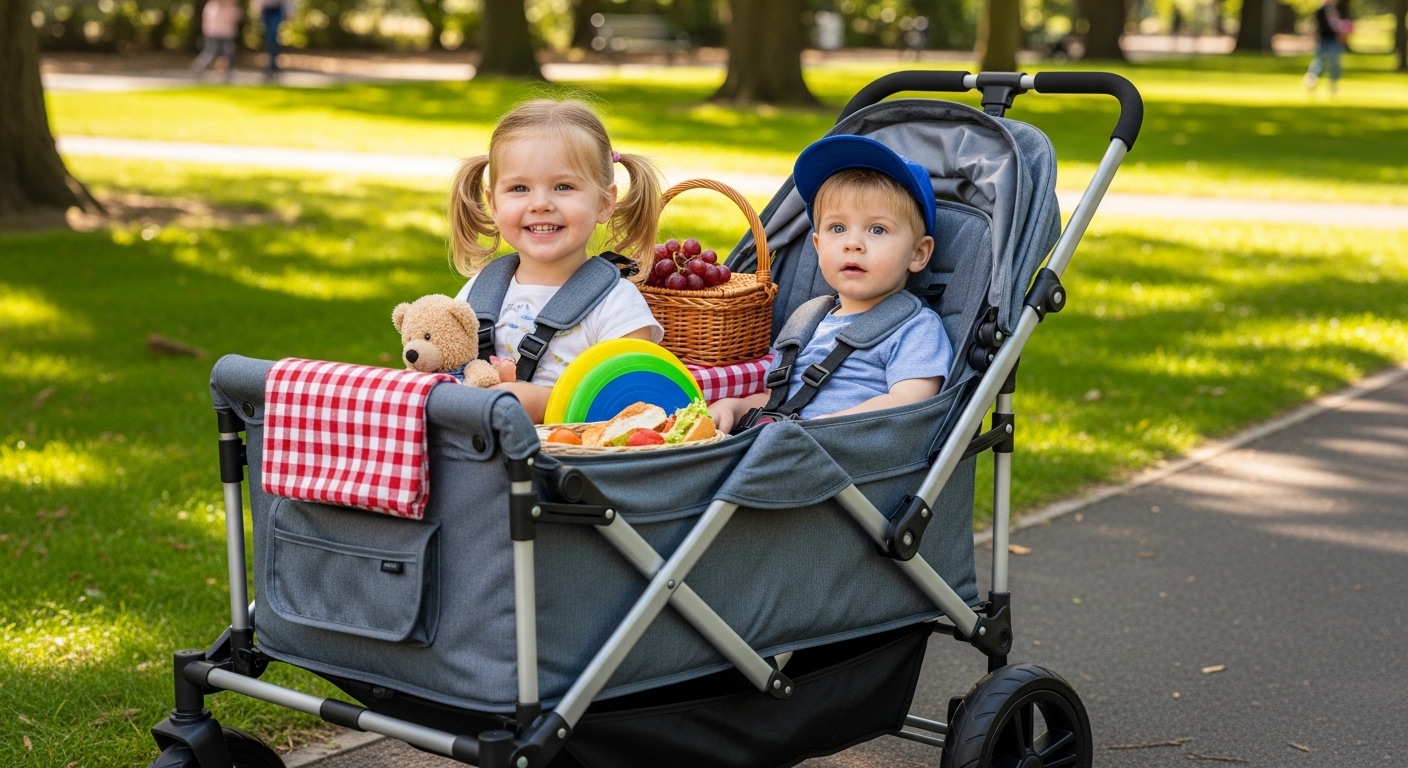
What is a stroller wagon, honestly? It’s usually the thing parents start googling after one exhausting grocery trip, one zoo meltdown, or one beach day where the stroller wheels decided sand was their mortal enemy. You probably saw another parent gliding around with two kids, snack bags, jackets, water bottles, and somehow still one free hand for coffee, and now you’re wondering if you missed some secret parenting upgrade nobody told you about.
That’s pretty much how most people discover stroller wagons. Not through ads. Through envy in parking lots.
A stroller wagon kinda sits in the middle of a traditional stroller and a pull wagon. It gives you the comfort and safety features of a stroller, but with the roomy, open setup of a wagon. Which sounds simple until you actually use one and realize your life got weirdly easier in tiny annoying ways you didn’t expect.
Some parents swear by them. Others think they’re too bulky. And honestly, both sides are a little right.
What Exactly Makes a Stroller Wagon Different?
A normal stroller is designed mainly for one child, sometimes two. The seating is fixed, the storage is limited, and once your kid gets bigger, things start feeling cramped real fast.
A stroller wagon changes the shape of the whole experience.
Instead of narrow forward-facing seats, you get a wagon-style cabin with more room to move around. Kids can sit facing each other, stretch out, or sometimes even lie down a bit during long outings. There’s usually space for gear too, which parents dont appreciate enough until they’ve carried six juice boxes and a random dinosaur toy for two hours.
Here’s a quick comparison that explains it cleaner than most product pages do.
| Feature | Traditional Stroller | Stroller Wagon |
|---|---|---|
| Seating Space | Compact | Spacious |
| Kid Capacity | 1–2 kids | 2–4 kids |
| Storage | Limited baskets | Large cargo area |
| Terrain Handling | Good on pavement | Better on rough terrain |
| Foldability | Usually easier | Often bulkier |
| Weight | Lightweight | Heavier |
| Pull or Push Option | Push only | Push and/or pull |
That last part matters more than people think. The push-and-pull flexibility feels oddly useful during crowded places like festivals or farmer’s markets where turning radius suddenly becomes your whole personality.
Why Parents Started Switching to Stroller Wagons
The popularity of stroller wagons exploded over the last few years, especially in the United States. According to data from the Juvenile Products Manufacturers Association, multi-functional baby gear categories have seen consistent growth as parents look for products that last longer and adapt to family life.
And that’s really the key thing.
Kids outgrow strollers kinda fast. A stroller wagon can stay useful much longer because older toddlers and even younger school-age kids still fit comfortably inside.
You’ll notice parents using them for:
- Theme parks
- Sports games
- Airports
- Beaches
- Camping trips
- Zoo visits
- Neighborhood walks
- Outdoor festivals
- Shopping trips with multiple children
There’s also the cargo factor. Some days your child barely even uses the thing. The wagon becomes a mobile storage unit carrying jackets, snacks, diapers, soccer balls, and one suspiciously sticky sippy cup you forgot existed.
A strange little truth of parenting is this: eventually you stop buying products for the baby and start buying products for your own survival.
The Main Features of a Stroller Wagon
Not all stroller wagons are built the same, which gets confusing because many brands throw around terms like “all-terrain luxury system” and whatever else the marketing department dreamed up at 2 a.m.
Still, most quality stroller wagons include a few common features.
Safety Harnesses
Modern stroller wagons usually come with either 3-point or 5-point harness systems. This matters because traditional pull wagons often lack proper child restraints.
If you’re using one for toddlers, harness quality is honestly non-negotiable.
Canopies and Sun Protection
Many models include adjustable UV-protection canopies. Some have removable fabric shades that cover both kids separately.
And yes, your child will still somehow complain about the sun touching exactly one eyebrow.
All-Terrain Wheels
This is where stroller wagons shine. Larger wheels and suspension systems help them move across:
- Gravel
- Grass
- Sand
- Dirt paths
- Uneven sidewalks
A regular stroller can feel like dragging office furniture once pavement disappears.
Storage Compartments
Cup holders, zip pockets, snack trays, parent organizers. Some stroller wagons look less like kid gear and more like tactical camping equipment.
Not complaining though.
Push and Pull Handles
Some models only push. Others allow both pushing and pulling depending on the situation.
Pulling can actually feel easier on rough terrain because your body angle changes naturally. Weirdly hard to explain until you try it.
Are Stroller Wagons Safe for Babies?
This is probably the biggest question parents ask, and the answer depends heavily on the child’s age and the wagon design.
Not every stroller wagon is suitable for infants.
Many models are designed primarily for children 6 months and older who can sit upright independently. Some premium stroller wagons support infant car seat attachments, allowing newborn compatibility.
The American Academy of Pediatrics emphasizes proper restraint systems and age-appropriate seating for young children in mobile gear products. That means checking:
- Weight limits
- Harness systems
- Recline support
- Infant compatibility
- Brake systems
- Stability ratings
One mistake parents sometimes make is assuming every wagon labeled “family-friendly” works for babies. It doesn’t always.
If you have a newborn, you should specifically look for stroller wagon systems approved for infant use.
Pros and Cons of a Stroller Wagon
You’ll probably love some parts of owning one and mildly hate others. That’s the honest version.
Pros
More Space for Kids
Children usually fight less when they aren’t squished shoulder-to-shoulder like tiny airline passengers.
Better for Long Outings
A stroller wagon works really well for full-day events where kids get tired on and off throughout the day.
Storage Capacity
You can carry a ridiculous amount of stuff without hanging bags dangerously off stroller handles.
Longer Usability
Many stroller wagons support kids up to 50–65 pounds per seat.
Easier on Rough Terrain
Parks, trails, beaches, and grassy sports fields become much less annoying.
Cons
Bulkier Size
These things are big. Like “rearrange your trunk” big.
Some families underestimate storage space needs at home too.
Heavier Weight
A stroller wagon can weigh 30–50 pounds before kids even get inside.
More Expensive
Quality stroller wagons often range between $300 and $900.
Yeah. Deep breaths.
Harder in Tight Indoor Spaces
Navigating narrow store aisles can become a slow social experiment in patience.
Popular Types of Stroller Wagons
Different families need different setups. A family with twins has very different needs compared to someone with one toddler and a baby.
Standard Stroller Wagons
Basic two-seat models designed for everyday family outings.
All-Terrain Stroller Wagons
Built for beaches, trails, camping, and rough surfaces.
Luxury Stroller Wagons
Premium fabrics, suspension systems, reclining seats, snack trays, and extra accessories. Sometimes they honestly look fancier than actual cars.
Compact Fold Models
Designed for smaller trunks and easier storage.
Convertible Wagon Systems
Can switch between stroller mode, cargo hauling, bench seating, or car seat compatibility.
Who Should Buy a Stroller Wagon?
Not every parent needs one. Sometimes a traditional stroller still makes more sense.
A stroller wagon tends to work best if you:
- Have multiple young children
- Spend lots of time outdoors
- Visit theme parks often
- Need extra storage
- Walk on rough terrain regularly
- Want gear that lasts beyond toddler years
If you mostly do quick indoor errands or live in a small apartment with limited storage, a regular stroller might honestly be less stressful.
Lifestyle matters more than trends.
Real-Life Situations Where Stroller Wagons Shine
The practical difference becomes obvious in certain situations.
Beach Trips
Sand destroys regular stroller wheels emotionally and physically. Wagon wheels handle it much better.
Disney or Theme Parks
Kids get tired fast. Stroller wagons provide room for snacks, souvenirs, water bottles, and random things children insist on carrying for 11 minutes before quitting.
Sports Practices
If you have older kids in sports and younger siblings tagging along, stroller wagons become portable base camps.
Airports
This one surprises people. A stroller wagon can carry kids and luggage together in some cases, though airline policies vary.
What to Look for Before Buying One
There are a few things worth checking before spending serious money.
Fold Size
Measure your trunk first. Seriously. Don’t skip this part and regret everything later.
Weight Capacity
Some models hold two toddlers comfortably. Others support bigger kids longer.
Safety Certifications
Look for compliance with ASTM safety standards.
Wheel Quality
Bigger wheels usually perform better outdoors.
Braking System
Reliable brakes matter more than fancy cup holders, despite what tired parents sometimes prioritize in the moment.
Cleaning Materials
Children spill things with astonishing creativity. Removable washable fabric helps a lot.
Best Age for Using a Stroller Wagon
Most children use stroller wagons comfortably between 6 months and about 5 years old, though it depends on the specific model and weight limits.
Interestingly, older toddlers often prefer wagon seating because it feels less restrictive than traditional strollers. They can interact more naturally with siblings or surroundings.
That tiny sense of independence matters to kids way more than adults realize.
Are Stroller Wagons Worth It?
For many families, yes. Especially if you’re constantly outdoors or juggling multiple kids.
But they aren’t magic.
A stroller wagon won’t suddenly make your children cooperative angels who happily share snacks and never argue about leg space. That technology has not been invented yet.
What it can do is reduce some physical strain. You carry less. Kids sit more comfortably. Outings feel a little smoother. And sometimes those small improvements matter alot when parenting already feels like managing a traveling circus with crackers everywhere.
A stroller wagon is basically a practical compromise between mobility and chaos. Not perfect, not tiny, definitely not cheap, but surprisingly useful once it becomes part of your routine.
And honestly, that’s probably why parents keep recommending them to each other in parking lots like they just discovered hidden wisdom.

Thomasjames is a stroller expert blogger sharing honest reviews, practical guides, and parenting tips, helping families choose safe, comfortable, high-quality baby strollers with confidence.