
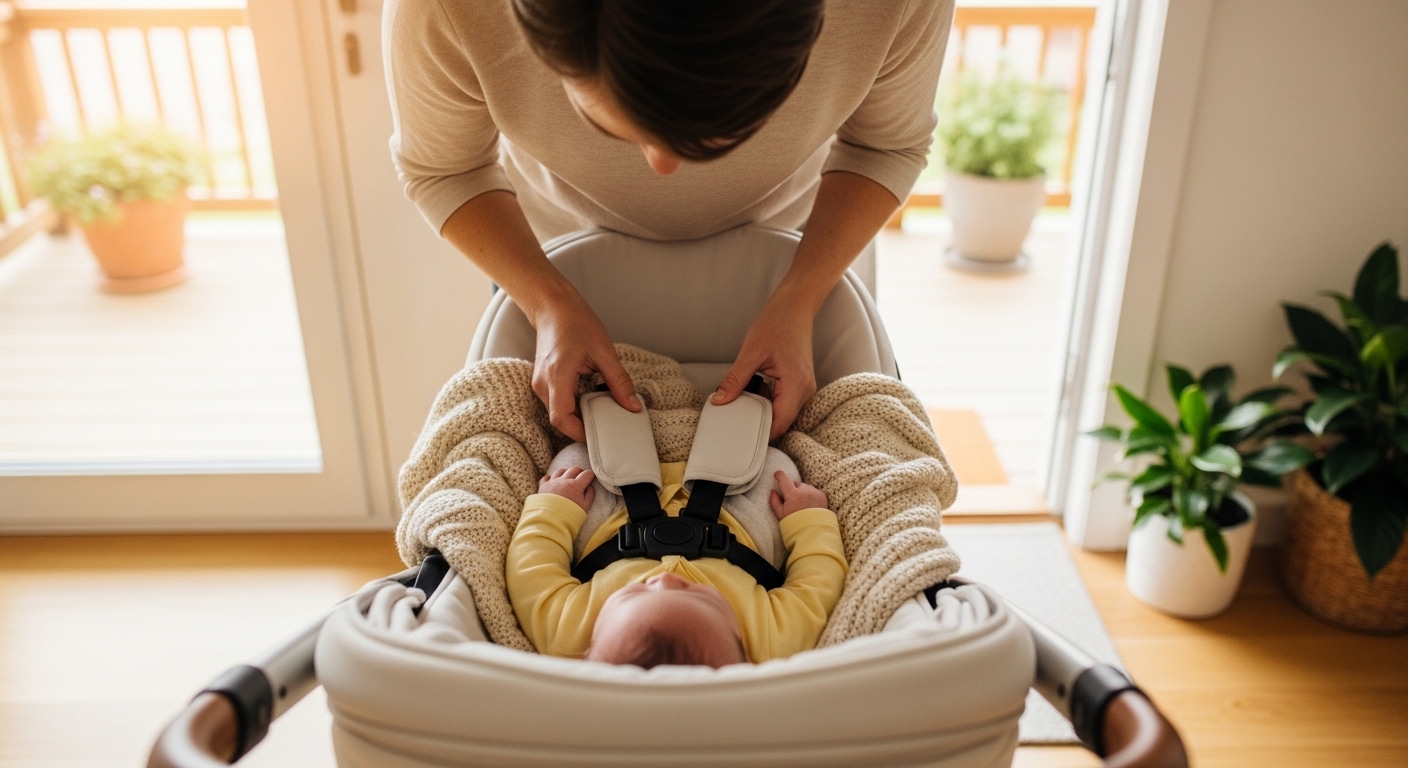
When can you put baby in stroller — yeah, that question usually pops into your head right after your arms start feeling like cooked noodles from carrying a newborn everywhere. One day your baby seems tiny and folded like a sleepy dumpling, then suddenly people outside are jogging with babies in strollers and you’re wondering if you missed some invisible parenting memo. It gets confusing weirdly fast.
And honestly, stroller labels don’t always help. Some say “newborn ready,” others basically whisper “absolutely not unless your child can hold their own head like a tiny turtle.” Meanwhile your baby just wants to either sleep dramatically or scream because sunlight offended them. So you end up googling at 2 a.m. while rocking a cranky infant with one foot. Been there-ish.
The short answer? You can put a baby in a stroller from birth in certain situations, but the type of stroller matters more than the baby’s exact age. Neck control, recline angle, car seat compatibility, and how bumpy your walk is — all that stuff changes the answer quite a bit.
The Biggest Thing That Matters: Head and Neck Control
A newborn baby doesn’t have strong neck muscles yet. That’s the entire reason stroller age recommendations exist. Babies need support because their heads are proportionally huge compared to the rest of their body. Tiny person, giant bobblehead physics. Nature did something odd there.
Most babies develop decent head and neck control around 3 to 5 months old. Until then, a fully upright stroller seat usually isn’t safe. If the stroller pushes baby into a sitting position too early, their airway can partially close. Pediatricians talk about this often because positional asphyxia in infants is a real concern, even though it’s rare.
Here’s a quick breakdown:
| Baby Age | Stroller Type Usually Safe | Notes |
|---|---|---|
| Newborn to 3 months | Bassinet stroller or infant car seat attachment | Full recline required |
| 3 to 5 months | Reclined stroller seat | Baby may start improving neck control |
| 6 months+ | Regular stroller seat | Most babies can sit upright safely |
| 9 months+ | Jogging stroller (usually) | Depends on manufacturer guidance |
The American Academy of Pediatrics recommends keeping infants in a position that supports open airways and proper spinal alignment during transport. That’s why bassinets and flat reclines matter early on.
Can Newborns Go in a Regular Stroller?
Usually no. Not unless the stroller fully reclines flat or specifically says it’s safe for newborns.
A lotta parents assume “stroller” means all strollers work the same way, but nope, stroller companies enjoy making this complicated for sport apparently. Some regular umbrella strollers are only designed for babies 6 months and older because they don’t recline enough.
If you place a floppy newborn in a semi-upright stroller seat, their chin can tilt toward their chest. That sounds harmless until you learn it may restrict breathing. Tiny airways are dramatic little things.
Signs a Stroller Is Safe for a Newborn
Look for these features:
- Full or near-flat recline
- Infant bassinet attachment
- Infant car seat compatibility
- Proper head support
- Five-point harness
- Manufacturer label saying “suitable from birth”
If you don’t see “newborn compatible” anywhere in the instructions, assume it probably isn’t.
Bassinet Strollers vs Infant Car Seat Strollers
This part confuses nearly everyone because stroller systems come with approximately 48 pieces and instructions written by emotionally unavailable robots.
A bassinet stroller lets your baby lie completely flat. It’s often considered the best option for longer walks because babies can stretch naturally and breathe comfortably.
An infant car seat stroller system uses your car seat attached to a stroller frame. It’s super convenient for errands. You move baby from car to stroller without waking them, which honestly feels like winning the lottery as a new parent.
But there’s a catch.
Experts generally advise against leaving babies in car seats for extended periods outside travel. Research published in The Journal of Pediatrics found that sitting too long in seated devices may affect infant breathing posture, especially in younger babies.
So if you’re going on a long stroll through the park, bassinet style is usually better than keeping baby clipped into a car seat for two hours while you buy iced coffee and stare into the void.
When Can Baby Sit Upright in a Stroller?
Most babies are ready around 6 months old. Sometimes a little earlier, sometimes later. Babies operate on their own strange software updates.
Your baby may be ready for a more upright stroller seat when they can:
- Hold their head steady
- Sit with minimal support
- Stay stable while moving
- Avoid slumping sideways constantly
If your baby still folds sideways like sleepy laundry after ten minutes, they probably need more recline.
A Little Reality Check Parents Don’t Always Hear
Milestones are averages, not deadlines.
Some babies sit independently at 5 months. Others wait until 8 months and act like sitting is a capitalist scam. Both can be perfectly healthy. Don’t panic because somebody on social media says their 4-month-old hikes mountains and files taxes already.
Are Jogging Strollers Safe for Babies?
Not immediately, no.
Most jogging stroller manufacturers recommend waiting until baby is at least 6 to 8 months old. Some pediatricians even suggest waiting closer to 8 months if the terrain is rough.
Jogging strollers move faster and create more vibration. Even smooth sidewalks can jostle a young infant’s head and neck more than parents realize. A newborn’s brain and spine are still developing rapidly, so repetitive bouncing isn’t ideal early on.
Before Using a Jogging Stroller, Baby Should Usually:
- Have strong neck control
- Sit upright comfortably
- Tolerate bumps without head wobbling
- Meet the manufacturer’s minimum age
And honestly? Walking first is completely fine. You don’t need to become a stroller-athlete immediately after having a baby. Your survival counts too.
Stroller Safety Tips Most Parents Learn the Hard Way
Some stroller mistakes happen because you’re exhausted, not careless. Sleep deprivation turns perfectly smart adults into people who forget where they placed their coffee while holding it.
Here are important safety habits worth remembering.
Always Use the Harness
Even if your baby “can’t move yet.”
Babies randomly unlock new abilities overnight. One day they’re stationary potatoes. Next day they’ve rotated sideways like determined little seals.
A five-point harness keeps baby secure, especially when leaning forward or going over curbs.
Don’t Hang Heavy Bags on the Handles
This causes stroller tip-overs more often than people think.
Consumer safety reports have documented injuries when diaper bags overloaded the back handles and flipped strollers backward. Physics again being rude.
Check Recline Before Every Walk
Some stroller seats slowly shift upright over time. Make sure your newborn is still positioned safely before moving.
Avoid Rough Terrain With Young Infants
Cobblestones look cute in travel photos. Your newborn disagrees deeply.
Stick to smoother sidewalks and paths until your baby gets older.
Common Questions Parents Quietly Stress About
“Can I Put My 2-Month-Old in a Stroller?”
Yes, if the stroller fully reclines or uses a compatible infant car seat attachment.
A 2-month-old still lacks strong neck control, so upright stroller seating isn’t usually appropriate yet.
“Can Baby Sleep in a Stroller?”
For walks? Sure, many babies nap beautifully in strollers.
For regular supervised strolling, naps happen naturally. But sleep experts generally advise against prolonged unsupervised sleep in sitting devices like car seats or partially upright strollers.
If your baby falls asleep during a walk, just keep an eye on their position and airway.
“When Can I Switch Out of the Infant Car Seat?”
Usually around 6 months or when your baby shows strong trunk control and fits safely in the stroller seat.
Some bigger babies outgrow infant car seats surprisingly fast. Others stay comfy longer. Babies refuse consistency almost as a hobby.
Different Types of Strollers and Their Recommended Ages
| Stroller Type | Typical Starting Age | Best Use |
|---|---|---|
| Bassinet stroller | Birth | Long walks, newborn support |
| Travel system stroller | Birth with car seat | Errands, quick trips |
| Full-size recline stroller | Birth if fully flat | Everyday use |
| Umbrella stroller | Around 6 months | Lightweight travel |
| Jogging stroller | 6–8 months+ | Running and rough terrain |
Not every expensive stroller is automatically better either. Sometimes parents spend huge money on trendy strollers then realize the cup holder can barely survive a pothole. Real life humbles product marketing pretty quick.
What Pediatricians Usually Recommend
Pediatricians mostly focus on three things:
- Airway safety
- Neck and spine support
- Proper restraint use
Dr. Benjamin Hoffman, former chair of the American Academy of Pediatrics Council on Injury, Prevention and Violence, has emphasized that proper restraint systems and age-appropriate seating are critical for infant transportation safety.
That sounds very official because it is. But translated into normal language, it basically means:
“Don’t rush your baby into sitting positions their body isn’t ready for.”
Which honestly applies to half of parenting.
Signs Your Baby Is Comfortable in the Stroller
Not every fuss means danger. Sometimes babies simply dislike being contained by earthly objects.
But these signs usually mean your baby is comfortable:
- Relaxed shoulders and hands
- Steady breathing
- Head supported well
- No chin pressing tightly to chest
- Calm sleeping posture
- Minimal slumping
If your baby looks twisted like a pretzel after ten minutes, adjust the recline or support inserts.
How Long Can a Baby Stay in a Stroller?
There’s no exact universal timer, but experts generally suggest avoiding very long periods in seated containers for young infants.
Babies need opportunities to:
- Stretch
- Move freely
- Practice tummy time
- Change positions
For newborns especially, extended periods in car seats or semi-upright devices aren’t ideal. If you’re out all day, taking regular breaks helps.
And honestly your own back probably needs the break too.
Travel Systems Make Early Months Easier
A travel system combines:
- Infant car seat
- Compatible stroller
- Click-in attachment system
These are incredibly popular because sleepy babies hate transitions with ancient fury.
If you’re constantly getting in and out of cars, travel systems simplify life a bit. You click the car seat into the stroller frame instead of unbuckling the baby every time.
But again, longer outdoor walks are often more comfortable in a bassinet attachment once possible.
Final Thoughts on When You Can Put Baby in a Stroller
So, when can you put baby in stroller safely? Technically from birth — but only with the right stroller setup. That’s the important part people sometimes skip over.
Newborns need flat recline support or infant car seat compatibility. Around 3 to 5 months, babies begin gaining better neck control. By 6 months, most are ready for standard stroller seating. Jogging strollers usually come later.
You don’t need to rush any of it.
Your baby won’t “fall behind” in stroller milestones. Which sounds ridiculous when written out loud, yet tired parents absolutely worry about stuff like that anyway. Mostly because everyone around them suddenly becomes a baby equipment philosopher.
Take your time, read your stroller manual carefully, and watch your actual baby more than internet timelines. Babies tend to tell you pretty clearly when they’re comfy, uncomfortable, sleepy, annoyed, or personally betrayed by sunlight.
Tiny humans are surprisingly opinionated.

Thomasjames is a stroller expert blogger sharing honest reviews, practical guides, and parenting tips, helping families choose safe, comfortable, high-quality baby strollers with confidence.