
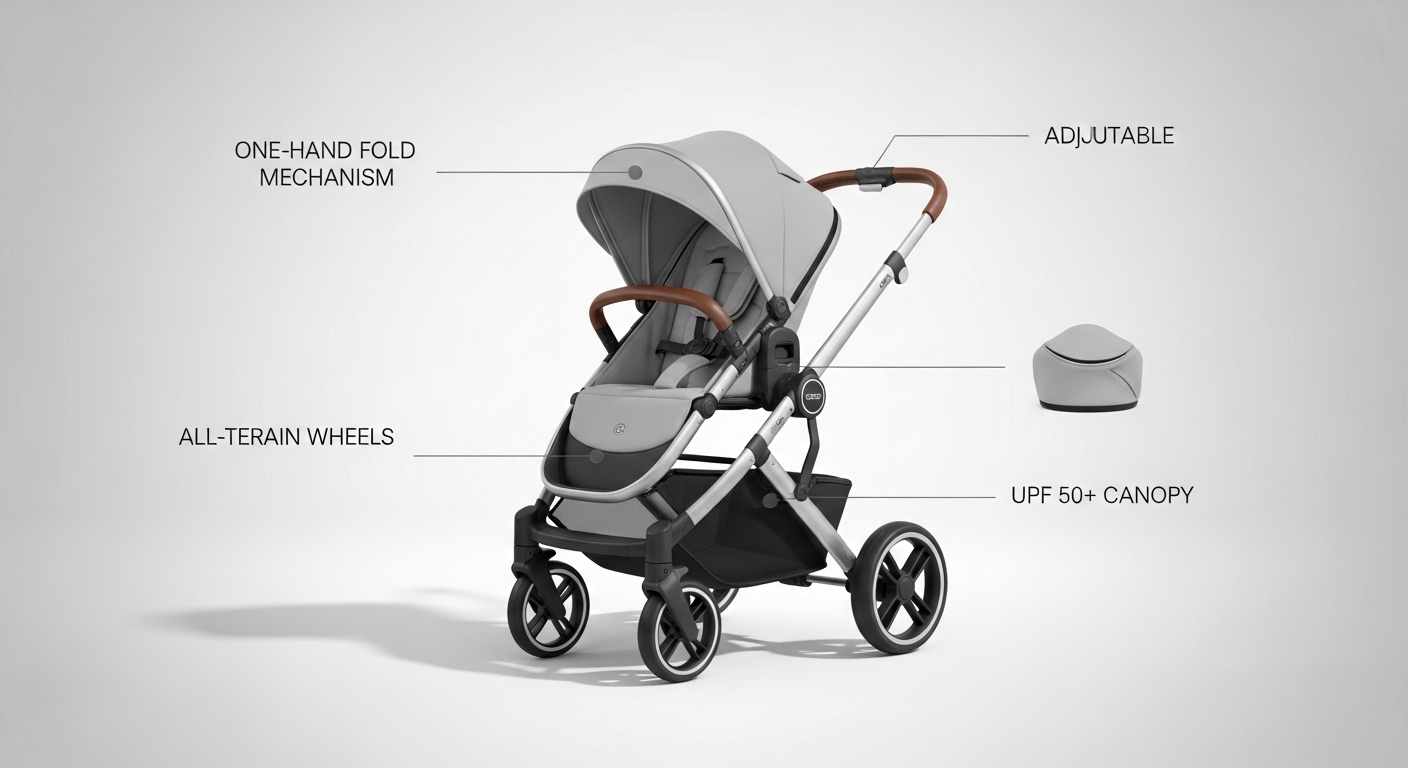
what is a stroller is probably one of those questions that pops into your head when you suddenly find yourself staring at a baby aisle in a store, slightly confused, wondering why there are like 20 different machines that all kinda look the same but also not really. And yeah, you’re not alone in that moment of “wait… which one even is the stroller?”
Most people only start thinking about strollers when life kind of forces it on them, like a new baby, a niece, nephew, or maybe just curiosity while scrolling online at 2 AM. It feels simple at first, but the more you look, the more complicated it gets.
A stroller is basically a wheeled seat designed to carry a baby or small child while you push them around. But that simple explanation doesn’t really do it justice, because modern strollers are way more than just “baby chairs on wheels.” They’re more like mobile comfort systems, sometimes even small transportation setups with storage, safety features, shade covers, and suspension systems (yes, like a mini car).
Why people even use a stroller in the first place
You might think, why not just carry the baby? And sure, that works… for like 5 minutes. After that, your arms start feeling like you did a full gym workout you never signed up for.
A stroller basically exists to make your life easier while keeping the child safe and comfortable.
Here’s what it actually helps with:
- Reduces physical strain on parents or caregivers
- Gives the baby a safe seated space while moving outside
- Helps carry essentials like diapers, bottles, snacks
- Allows longer outdoor walks without exhaustion
- Keeps the child shaded and protected from sun or wind
And honestly, once you start using one, you kind of wonder how people survived without it before.
What is a stroller really made of?
At its core, a stroller is a combination of a few basic parts, even if the designs look fancy or futuristic.
Most strollers include:
- A frame (usually aluminum or steel, lightweight but strong)
- A seat or bassinet area for the child
- Wheels (usually 3 or 4 depending on design)
- A handlebar for pushing
- Safety harness system (most commonly 5-point harness)
- Canopy or hood for shade
- Storage basket underneath
Some modern versions also include shock absorbers, cup holders, adjustable seats, and even reversible seating so your baby can face you or face forward.
It’s funny because what looks like a simple product actually has a surprising amount of engineering behind it.
Different types of strollers you’ll see
Not all strollers are the same, and this is where people usually get overwhelmed. There’s no one-size-fits-all situation here.
1. Standard stroller
This is your everyday stroller. The one you see in parks, malls, everywhere. It balances comfort and convenience.
- Good for daily use
- Moderate weight
- Comfortable seating
- Decent storage space
2. Lightweight or umbrella stroller
This one folds easily and is super light.
- Easy to carry and travel with
- Less padding and features
- Not ideal for newborns
- Great for quick trips
3. Jogging stroller
Built for people who like to run or jog while pushing a stroller.
- Large wheels for stability
- Strong suspension system
- Better control at higher speeds
- Usually has a hand brake
The American Academy of Pediatrics (AAP) notes that jogging strollers should only be used once a baby has enough neck and head control, usually after several months of age.
4. Travel system stroller
This is basically a combo setup.
- Includes infant car seat + stroller frame
- Easy to move baby from car to stroller
- Very convenient for newborns
5. Double or twin stroller
For two kids at once.
- Side-by-side or front-and-back seating
- Heavier and bulkier
- Very useful for twins or close-age siblings
Quick comparison table
| Type | Best For | Weight | Portability | Comfort |
|---|---|---|---|---|
| Standard | Daily use | Medium | Medium | High |
| Umbrella | Travel/quick trips | Light | Very high | Low-medium |
| Jogging | Running parents | Heavy | Low | High |
| Travel system | Newborns | Medium-heavy | Medium | Very high |
| Double stroller | Two kids | Heavy | Low | High |
How a stroller actually works (simple version)
If you strip away the fancy parts, a stroller works on a very basic mechanical idea: wheels reduce friction.
Instead of lifting a child, you push them on wheels, and those wheels distribute weight so movement becomes easier. But modern strollers add more layers to this basic idea.
Things like:
- Suspension systems absorb bumps
- Swivel wheels allow turning easily
- Locking wheels improve stability
- Reclining seats support sleeping posture
So yeah, it’s simple physics mixed with comfort design.
Safety matters more than people realize
One thing that often gets ignored is stroller safety, but it’s actually a big deal.
Safety organizations like ASTM International (which sets stroller safety standards in the US, known as ASTM F833) require things like:
- Stability testing so strollers don’t tip over easily
- Strong locking mechanisms
- Secure harness systems
- No sharp edges or unsafe gaps
- Brake performance checks
The idea is simple: even if a stroller looks good, it must be safe under pressure, uneven ground, or sudden movement.
The American Academy of Pediatrics also emphasizes using harness straps every single time, even for short walks. Because yeah, accidents don’t really ask for long walks first.
Choosing the right stroller (and not regretting it later)
This is where people usually mess up. They either buy something too cheap or way too advanced for their actual needs.
Here’s a simple way to think about it:
Ask yourself:
- Will I use it daily or occasionally?
- Do I travel often?
- Do I need space for storage?
- Is my child a newborn or toddler?
- Do I jog or walk mostly?
What actually matters most:
- Safety harness quality
- Wheel stability
- Folding mechanism
- Weight (you’ll feel this daily)
- Seat comfort
- Shade protection
A stroller can look amazing online but feel completely different in real life when you’re lifting it into a car trunk for the third time in a day.
Common mistakes people make
You’d be surprised how often people buy the wrong stroller.
Some common ones:
- Buying too big for small car storage
- Ignoring weight (and regretting it later)
- Thinking expensive always means better
- Not checking age suitability
- Forgetting about terrain (city vs rough roads)
One parent once described it like this: “I bought a stroller that looked like a spaceship, but it felt like carrying a suitcase every time I used it.” That kind of sums it up.
Real-world usage insight
In real life, a stroller becomes more than just a tool. It becomes part of your routine.
You’ll notice things like:
- How smoothly it turns in tight grocery aisles
- How fast it folds when you’re in a rush
- How the wheels behave on uneven sidewalks
- How much storage you suddenly rely on
And slowly, it just becomes normal life equipment. Like shoes, but for your child’s mobility.
FAQ: quick answers people usually look for
Is a stroller necessary?
Not absolutely necessary, but it makes daily movement way easier and safer for both parent and child.
When can a baby use a stroller?
Most babies can use a stroller from birth if it fully reclines or uses a newborn-safe seat. Always check manufacturer guidelines.
Can strollers be used for jogging?
Only jogging-specific strollers are designed for that. Regular ones are not stable enough for running.
How long do strollers last?
A good stroller can last several years, often through multiple children if maintained properly.
Final thoughts
So when you break it down, what is a stroller isn’t just a definition you memorize. It’s more like a small piece of everyday engineering designed to make life smoother when you’re moving around with a child.
It’s not perfect, it’s not magical, but it quietly solves a problem most people don’t fully understand until they actually need it.
And once you do, you’ll probably stop seeing it as just “baby gear” and start seeing it as something that saves your back, your time, and sometimes your patience too.

Thomasjames is a stroller expert blogger sharing honest reviews, practical guides, and parenting tips, helping families choose safe, comfortable, high-quality baby strollers with confidence.