
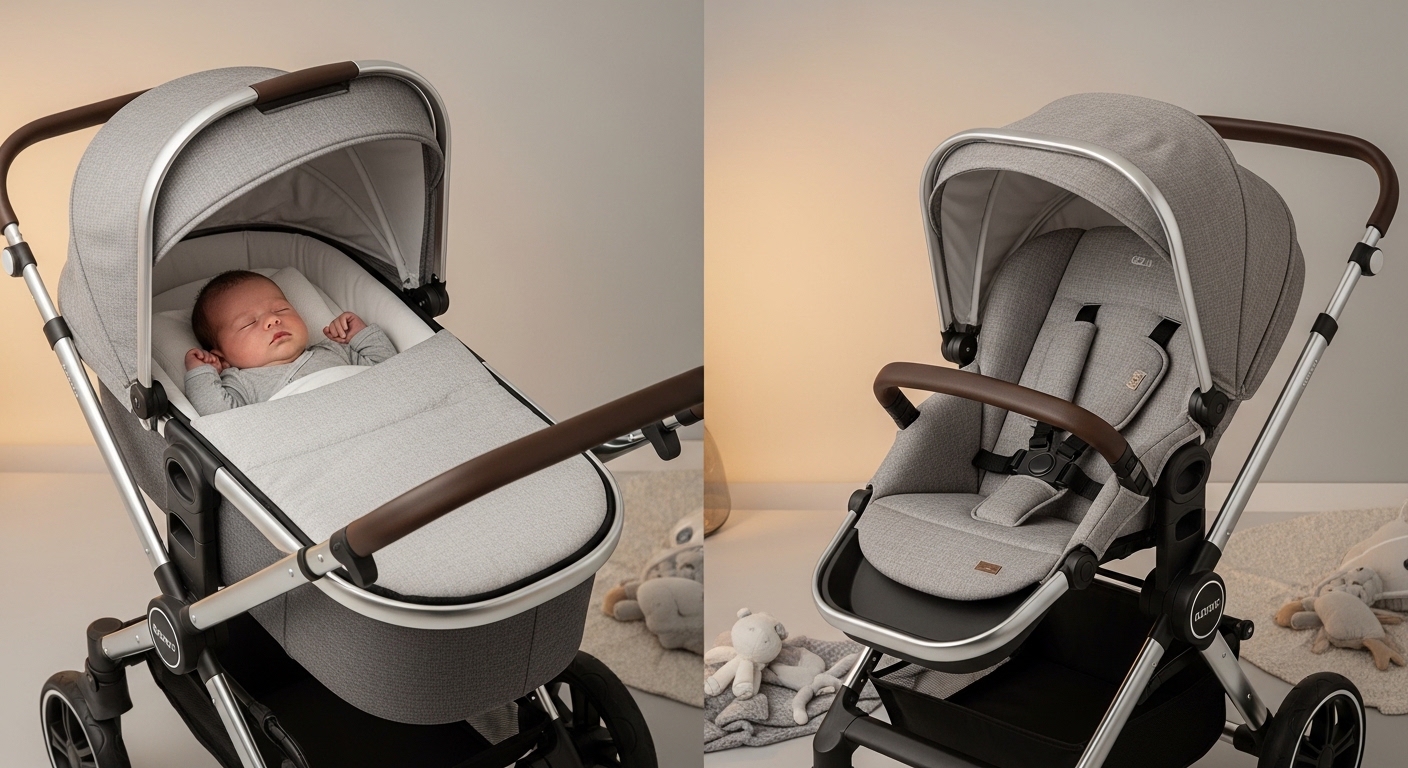
is a bassinet necessary for stroller—this is one of those questions that pops up late at night when you’re staring at baby gear tabs open on your phone and thinking, “why does everything feel so complicated already?” You’re not really asking for definitions, honestly, you’re trying to figure out if you’re about to waste money or if your baby will somehow be uncomfortable without it. And yeah, that confusion is pretty normal, even if nobody says it out loud.
You’ll see parents arguing both ways online, some saying it’s a must-have, others saying they never used one at all. So you’re stuck in the middle, trying to decode what actually matters and what’s just marketing noise. Let’s break it down in a real-world way, not the glossy brochure version.
What People Really Mean When They Ask “Is a Bassinet Necessary for Stroller”
When someone asks is a bassinet necessary for stroller, they’re usually not talking about the technical feature. They’re really asking: “Will my newborn be safe and comfortable if I just use a regular stroller seat?”
Most standard stroller seats recline, but they don’t go fully flat. A bassinet, on the other hand, lets a baby lie completely horizontal. That difference sounds small, but for a newborn it kinda matters more than you think.
Parents also mix up terms a lot. Some stroller systems call a “lie-flat seat” a bassinet, even when it’s not a true separate carrycot. So half the confusion starts right there, with naming that doesn’t help anyone.
Safety Perspective: Why Flat Position Matters Early On
Newborns (especially under 3–4 months) have weak neck control and soft spinal alignment. Pediatric guidance, including general recommendations from organizations like the American Academy of Pediatrics (AAP), emphasizes that babies should sleep on a flat, firm surface on their back to reduce risks during sleep.
Now here’s where strollers enter the conversation.
A bassinet-style stroller keeps your baby flat, which supports:
- Easier breathing position (no chin-to-chest slump)
- Better spinal alignment in early months
- More natural sleep posture for long walks
A reclined stroller seat, even if padded, can sometimes tilt the baby’s head forward slightly. It’s not automatically dangerous in short supervised use, but it’s not ideal for long naps.
That’s why many newborn travel systems include a bassinet or flat-lying option, even if parents don’t end up using it all the time.
When a Stroller Bassinet Actually Makes Sense
Let’s be honest, not every parent needs one. But in some situations, it’s actually super useful.
You might genuinely benefit from a bassinet if:
- You walk a lot outdoors daily
- Your baby naps frequently during strolls
- You live in a place where home space is tight
- You want to avoid transferring a sleeping baby constantly
One underrated thing: newborns fall asleep randomly, like they’ve got no schedule at all. A bassinet lets you keep that sleep going without disturbing them.
Some parents also use it indoors as a temporary sleep space during the day, though it’s not meant to replace a proper crib for night sleep.
When You Can Skip the Bassinet Completely
Now here’s the part that surprises people—you absolutely can skip it.
You may not need a stroller bassinet if:
- Your stroller has a full lie-flat recline seat
- You don’t walk long distances often
- You prefer babywearing for early months
- You’re working with a tight budget
A lot of modern strollers today are designed with near-flat recline systems that are approved for newborn use. They don’t look like traditional bassinets, but they serve a similar function.
Honestly, many parents use a car seat + stroller combo and just transition to upright seating when baby grows a bit. It works fine for a lot of families.
Bassinet vs Recline Seat: Real Comparison
Sometimes seeing things side-by-side makes it click better.
| Feature | Bassinet Stroller | Recline Seat Stroller |
|---|---|---|
| Position | Fully flat | Semi-flat to upright |
| Newborn comfort | Very high | Moderate |
| Sleep suitability | Excellent | Short naps only |
| Portability | Bulky | More compact |
| Usage duration | ~0–6 months | 0+ months (varies) |
| Cost | Higher | Lower |
So yeah, bassinet wins on pure comfort, but loses on convenience and price.
Real Parent Scenarios (Not Theory)
Let’s make it more real.
One parent in an urban apartment might say: “I used the bassinet like crazy, my baby slept 2 hours while I walked around the block just to stay sane.”
Another parent might say: “Honestly I skipped it, my stroller reclined flat enough and I didn’t want extra storage clutter.”
And both are correct in their own setup. There’s no universal rule, even though baby gear companies kinda act like there is.
What About Sleep Safety on Strollers?
This part gets misunderstood a lot.
A stroller bassinet is generally considered safer for longer naps than a reclined seat because it mimics a flat sleep surface. But strollers are still not a replacement for a crib or bassinet meant for overnight sleep.
A simple way to think about it:
- Short supervised nap while walking → stroller is fine
- Long unattended sleep → should be in proper sleep setup
Even if baby dozes off in a stroller bassinet, most experts still suggest moving them to a proper sleep space when possible.
Common Mistakes Parents Make
People usually overthink this purchase, but also make a few predictable mistakes.
Some of them are:
- Buying a bassinet they use only twice
- Assuming all strollers are newborn-safe when they’re not
- Confusing “flat recline” with true bassinet safety
- Ignoring stroller weight and storage issues
- Thinking more expensive always means necessary
And honestly, baby gear marketing doesn’t help at all. Everything is “essential,” which is rarely true.
Buying Guide: If You’re Still Unsure
If you’re still stuck wondering is a bassinet necessary for stroller, here’s a simple decision approach:
Ask yourself:
- Will I walk daily with a newborn?
- Do I want baby to nap during walks?
- Do I prefer minimal baby transfers?
- Do I have space for extra stroller parts?
If you answer “yes” to most of these, a bassinet or travel system is worth considering.
If not, a good recline stroller will probably do the job just fine.
Also check:
- Recline angle (must be near-flat for newborns)
- Breathable fabric
- Stability on uneven ground
- Compatibility with infant car seats if needed
A Quick Reality Check Most People Ignore
Here’s something that doesn’t get said enough: babies grow fast. Like, surprisingly fast. That bassinet stage is often just a few months long, sometimes even shorter depending on the baby’s size and development.
So when you’re thinking about value, you’re really weighing a short comfort window vs long-term stroller usability.
That’s why some parents feel like they overbought, while others feel it was totally worth it.
Final Thoughts
So, is a bassinet necessary for stroller? Not strictly. It’s more like a comfort upgrade than a survival requirement.
It gives you smoother newborn naps, better flat positioning, and fewer awkward transfers. But plenty of families raise babies perfectly fine without one, especially with modern strollers that recline fully.
In the end, it’s less about “must-have” and more about how your daily life actually looks. If you’re picturing long walks, sleepy newborns, and quiet streets, a bassinet feels almost magical. If your reality is quick errands and short trips, it might just sit there collecting dust, kinda forgotten.
And that’s usually the honest answer nobody tells you upfront.

Thomasjames is a stroller expert blogger sharing honest reviews, practical guides, and parenting tips, helping families choose safe, comfortable, high-quality baby strollers with confidence.