
You’ve probably caught yourself wondering when can baby sit in front facing stroller, maybe while your little one is twisting around trying to see the world instead of your face, and yeah, it feels like they’re ready before you’re fully sure they actually are. It’s one of those small parenting decisions that somehow feels weirdly big, like you don’t wanna rush it, but also don’t wanna hold them back either.
Truth is, babies don’t come with a blinking “front-facing ready” sign. You kinda read the signs, mix it with guidance, and go from there. So let’s break it down properly, but not in that stiff, robotic way—more like how you’d actually think about it during a walk.
What Does “Front Facing Stroller” Really Mean?
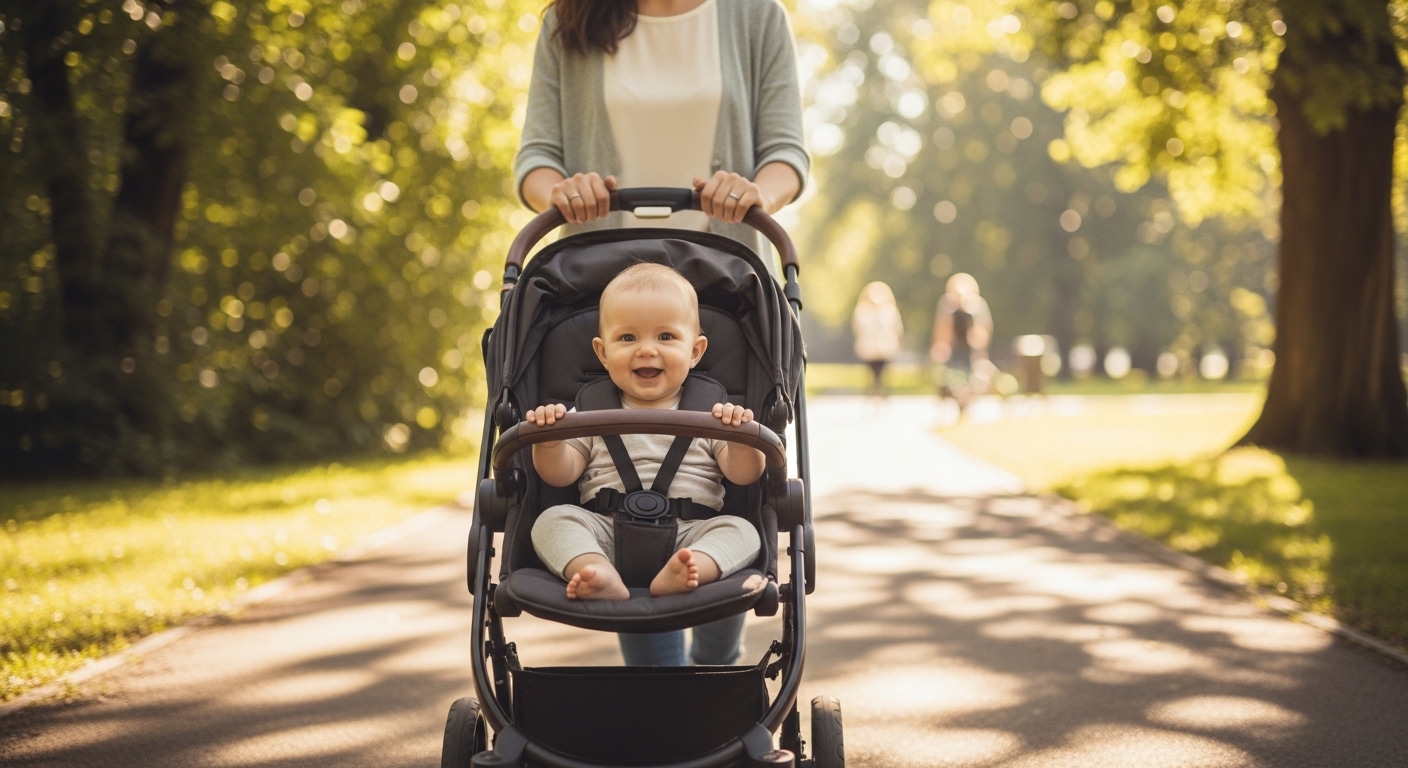
A front-facing stroller is simply when your baby sits facing outward, looking at the world instead of looking at you. Sounds obvious, but the shift is actually a big developmental step, not just a seating preference.
When babies are newborns, they need that parent-facing position. It’s not just emotional comfort, it’s also about safety and neck control. Facing you means you can watch their breathing, expressions, and any signs of discomfort without guesswork.
But once they start getting curious—like properly curious, not just random staring at trees—they begin to want more visual stimulation. That’s where front-facing comes in.
Still, it’s not about curiosity alone. There’s a physical readiness part that matters more than anything else.
The Ideal Age: When Can Baby Sit in Front Facing Stroller?
Most pediatric recommendations suggest that babies can sit in a front-facing stroller around 6 months old, but that number isn’t a strict rule, it’s more like a general checkpoint.
Here’s the real requirement:
- Strong neck control
- Ability to sit upright (with minimal support)
- Good head stability
Some babies hit this at 5 months, others closer to 7 months. So yeah, age matters, but development matters more.
Quick Readiness Checklist
If you’re unsure, look at this:
| Sign | What It Means |
|---|---|
| Holds head steady | Neck muscles are developed |
| Sits with support | Core strength is improving |
| Shows curiosity | Mentally ready for outward view |
| Doesn’t slump forward | Posture is stable enough |
If your baby ticks most of these, you’re probably good to start trying short front-facing rides.
Why You Shouldn’t Rush It (Even If Baby Seems Ready)
It’s kinda tempting, honestly. Your baby looks bored facing you, maybe fussing a bit, turning their head constantly. You think, okay maybe they want more.
But here’s the thing—just because they want it doesn’t mean their body is fully ready.
Risks of Switching Too Early
- Neck strain due to weak muscles
- Slouching posture affecting breathing
- Overstimulation from too much visual input
- Reduced ability to monitor baby easily
According to pediatric advice often referenced by organizations like the American Academy of Pediatrics, early months should prioritize support, alignment, and supervision over exploration.
And overstimulation is real. Babies can get overwhelmed faster than you’d expect, even if they don’t cry instantly.
Benefits of Front-Facing Stroller (At the Right Time)
Once your baby is ready, though, it’s actually a really exciting shift. It’s like their world expands overnight.
What Changes When They Face Forward?
- They engage more with surroundings
- Improved visual tracking and focus
- More excitement during walks (sometimes too much lol)
- Encourages curiosity and early learning
You’ll notice them staring at people, cars, trees, random dogs passing by. It’s like they suddenly realize there’s a whole universe out there.
But balance is important. Some experts suggest alternating between parent-facing and forward-facing to avoid overstimulation.
Parent-Facing vs Front-Facing: Which Is Better?
This isn’t really a “one is better” situation. It’s more about timing and purpose.
Comparison Table
| Feature | Parent-Facing | Front-Facing |
|---|---|---|
| Best for age | Newborn–6 months | 6 months+ |
| Emotional bonding | Strong | Reduced |
| Visual stimulation | Limited | High |
| Monitoring baby | Easy | Slightly harder |
| Development focus | Security | Exploration |
So you’re not replacing one with the other forever. You’re just evolving with your baby’s needs.
Signs Your Baby Is Ready for Front Facing Stroller
Sometimes babies kinda tell you in their own weird ways.
Look for These Behaviors
- Constantly trying to sit up
- Leaning forward in stroller
- Turning head to see surroundings
- Less interest in making eye contact during walks
It’s like they’re saying, “I need a better view here.” And honestly, they’re not wrong.
But again, behavior alone isn’t enough—pair it with physical readiness.
How to Transition Safely
Switching shouldn’t be sudden like flipping a switch. You ease into it.
Step-by-Step Transition
- Start with short walks (10–15 minutes)
- Observe posture and comfort
- Increase duration gradually
- Alternate with parent-facing rides
Also, make sure your stroller seat has proper support. Not all strollers are built equal, some are too upright or lack cushioning.
If your baby slouches even slightly, it’s a sign to wait a bit longer.
Common Mistakes Parents Make
You’re not alone in this, almost everyone messes this up a little at first.
Things to Avoid
- Switching too early because baby seems bored
- Ignoring posture issues
- Keeping baby front-facing for too long initially
- Not using safety harness properly
One sneaky mistake is assuming “they didn’t cry, so it’s fine.” Babies don’t always cry when uncomfortable. Sometimes they just… endure it quietly, which is kinda unsettling if you think about it.
What Experts Say About Stroller Positioning
Pediatricians and child development experts often emphasize that the first 6 months should focus on interaction and bonding, not independence.
A commonly cited idea is that babies benefit from seeing your face during early months. It helps with:
- Emotional regulation
- Language development
- Social connection
So when you switch to front-facing, you’re not just changing direction, you’re slightly changing the kind of interaction your baby experiences.
That’s why moderation matters.
Real-Life Example (Because Theory Isn’t Everything)
Let’s say you have a 5.5-month-old baby who sits with support and holds their head well. You try front-facing for a short walk.
At first, they’re excited. Looking everywhere. Then after 10 minutes, they start getting fussy.
That’s normal.
It doesn’t mean they’re not ready. It just means they’re adjusting.
Now compare that with a 4-month-old who slumps forward within minutes. That’s not readiness, that’s gravity winning.
Choosing the Right Stroller for Front Facing
Not every stroller handles front-facing equally well.
Features to Look For
- Adjustable seat recline
- Strong back and neck support
- Five-point harness
- Shock absorption for smoother rides
Some strollers even allow switching between parent-facing and front-facing easily, which is honestly the best option if you’re still figuring things out.
Final Thoughts: So, When Can Baby Sit in Front Facing Stroller?
If you’re still asking when can baby sit in front facing stroller, the honest answer is: around 6 months, but only if your baby shows the right physical signs.
It’s less about hitting a specific age and more about reaching a certain level of strength and stability.
Take it slow. Watch your baby more than you follow a number. Try short outings, adjust as needed, and don’t stress if it takes a bit longer.
Babies aren’t in a rush, even if it feels like everything around you is.
And yeah, once they’re ready, those first front-facing walks? They’re kinda magical in a quiet, everyday way you didn’t expect.

Thomasjames is a stroller expert blogger sharing honest reviews, practical guides, and parenting tips, helping families choose safe, comfortable, high-quality baby strollers with confidence.